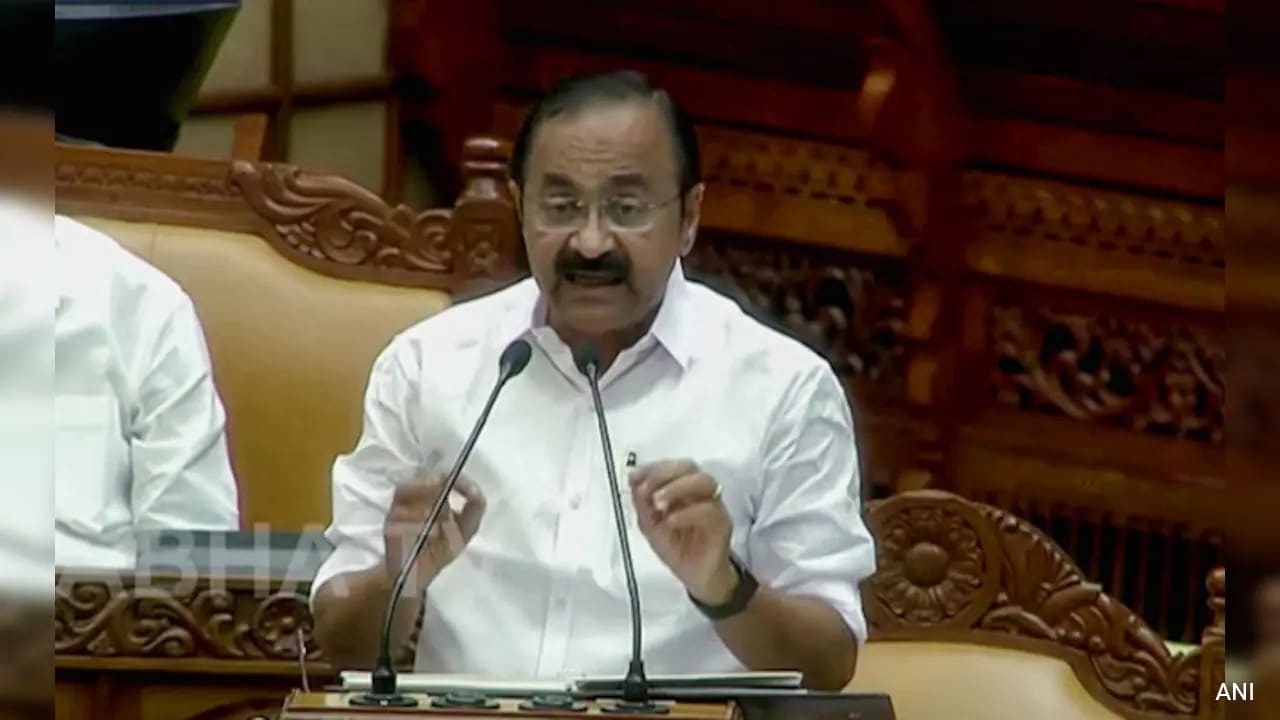
Opposition leader R. Ashok labeled the Congress government's Permanent Residence Certificate (PRC) proposal as unconstitutional, alleging it aims to legitimize illegal Bangladeshi migrants for electoral gain. BJP echoed the charge, calling the move a threat to national security.
Key Takeaways
- BJP alleges the Congress PRC scheme violates the Constitution.
- R. Ashok claims the proposal is designed to secure votes from illegal Bangladeshi migrants.
- BJP demands central intervention to halt the PRC rollout.
At a programme in Mysuru, Karnataka opposition leader R. Ashok accused the Congress‑run state government of breaching constitutional norms by proposing the issuance of Permanent Residence Certificates (PRCs). He argued that the move is a tactical effort to secure voting rights for illegal Bangladeshi migrants during the ongoing Special Intensive Revision (SIR) of electoral rolls, thereby compromising national security.
Background of the Proposal
The SIR exercise, aimed at cleansing Karnataka’s voter list, has stalled many residents’ ability to prove their domicile. In response, the Congress administration announced a PRC scheme to provide a formal residence proof. Critics, however, contend that citizenship and domicile matters are exclusively under the Union government’s jurisdiction as per Article 366(2) of the Constitution, and a state cannot unilaterally issue such documents.
BJP’s Counter‑Argument
State BJP President B.Y. Vijayendra condemned the proposal, asserting that authorising Revenue Inspectors to issue PRCs demonstrates a reckless disregard for national security. He announced that a BJP delegation will meet the Governor shortly to demand an immediate withdrawal of the scheme.
Statistical Claims and Political Motive
Ashok claimed that India hosts roughly two crore illegal Bangladeshi migrants, with 20‑30 lakh residing in Karnataka. He cited a senior Bengaluru police officer who reported the recent deportation of about 250 Bangladeshi nationals, adding that many remain in Bengaluru, Mysuru, Kodagu and Chikkamagaluru districts. According to him, these migrants form a core vote bank for the ruling party, prompting the Congress to adopt appeasement politics.
Implications for Federal Dynamics
If the central government does not intervene, state‑level PRC schemes could proliferate, intensifying tensions between Union and state authorities. The controversy also risks reshaping Karnataka’s communal and electoral landscape, as immigration and citizenship become focal points of public debate.