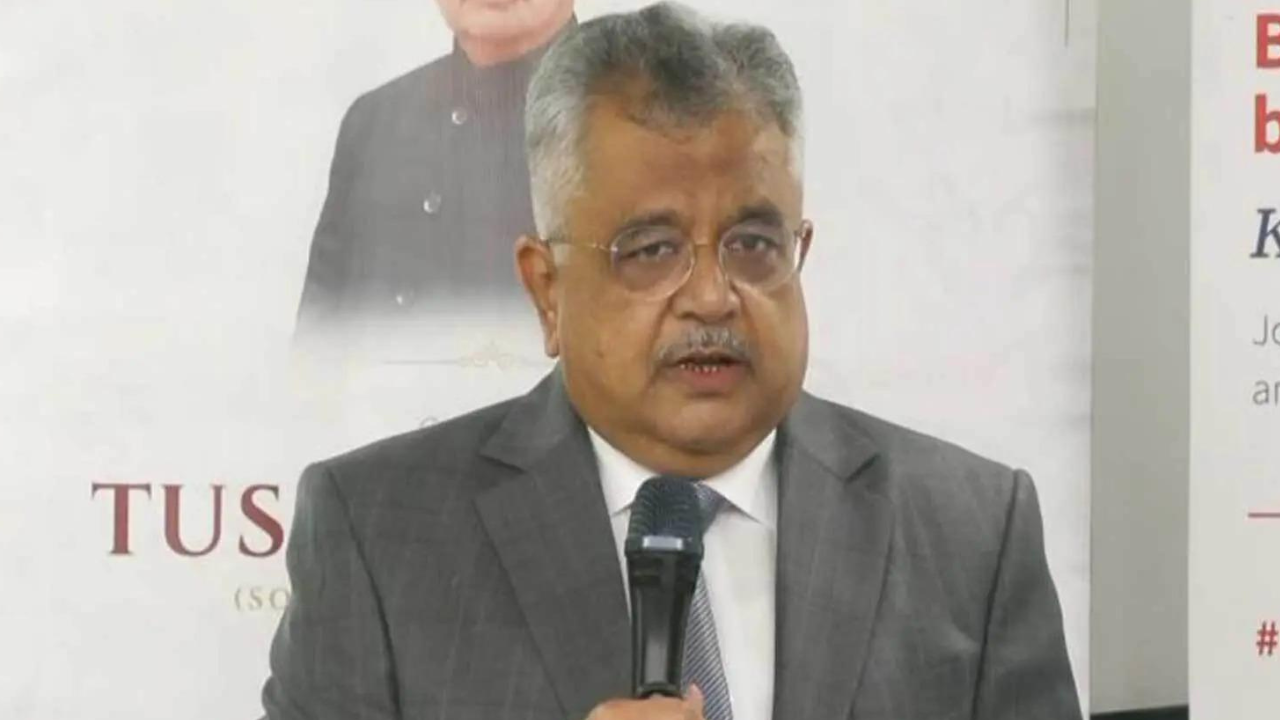
Solicitor General Tushar Mehta clarified that most Hindu personal law follows the Mitakshara school, rooted in Yajnavalkya Smriti, not Manusmriti. He highlighted the historic split between Mitakshara and Dayabhaga schools and their modern legal implications.
Key Takeaways
- Most Hindu personal law is based on the Mitakshara school, not Manusmriti.
- Mitakshara and Dayabhaga represent two distinct inheritance philosophies.
- Ancient prohibitions on degrees of relationship were later codified by Parliament.
New Delhi – Solicitor General Tushar Mehta asserted on Saturday that linking Hindu law to the ancient text ‘Manusmriti’ is a widespread misconception. According to Mehta, the overwhelming majority of Hindus across India adhere to the Mitakshara school of thought, which draws its principles from the Yajnavalkya Smriti, not from Manusmriti.
Historical Evolution of Hindu Personal Law
The legal framework governing marriage, inheritance, and adoption among Hindus dates back well before the 7th century AD. Two primary schools emerged: Mitakshara and Dayabhaga. The Mitakshara school, systematized by Vijñānesvara, interprets Yajnavalkya Smriti and grants inheritance rights by birth, treating the family as a joint entity. In contrast, the Dayabhaga school—predominant in Bengal and Assam—restricted inheritance to those who could perform the ritual ‘pind daan’, a symbolic offering to ancestors.
Mitakshara vs. Dayabhaga: Core Differences
Under Mitakshara, a coparcener acquires a share of ancestral property at birth, reflecting a liberal, birth‑right approach. Dayabhaga, however, ties the right of succession to the performance of the pind ceremony, making it a more restrictive, performance‑based system. Mehta likened the Dayabhaga concept of ‘pind’ to a DNA‑like identifier, but emphasized that such a narrow interpretation limits the applicability of the law in contemporary society.
Parliamentary Codification and Modern Interpretation
In 1955, Parliament enacted the Hindu Marriage Act, integrating ancient prohibitions on degrees of relationship into modern statute law. Mehta praised this synthesis of ‘ancient wisdom’ with democratic legislation, noting that it continues to regulate marriage and inheritance across the country. He also presented four prevailing interpretations of the ‘right to adopt’, demonstrating that scripturally‑based statutes can evolve dynamically to meet present‑day needs.
Implications for Future Legal Reform
Mehta’s remarks signal a shift away from simplistic references to Manusmriti in judicial discourse, steering courts toward a nuanced reliance on Mitakshara principles. Legal scholars anticipate that this clarification could streamline inheritance disputes, promote gender‑equitable outcomes, and encourage a more progressive reading of Hindu personal law. The distinction also underscores the importance of regional variations—particularly Dayabhaga’s continued relevance in Bengal and Assam—when crafting nationwide reforms.