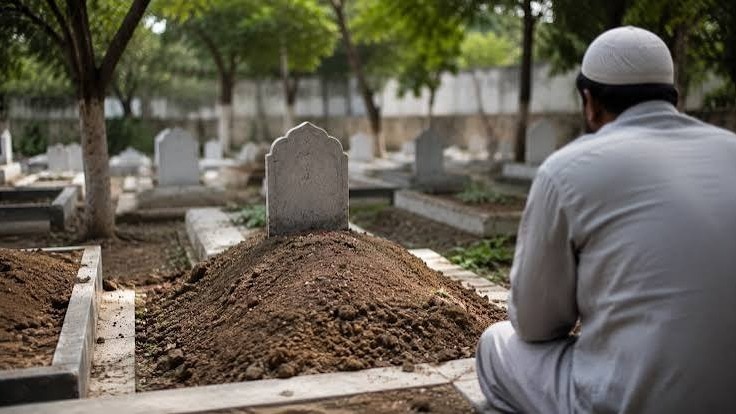
A Delhi district court dismissed a petition seeking to stop the reuse of a grave at Shaheen Bagh cemetery, ruling that scarce public land cannot be turned into a private right. The judgment leaves the appellant’s right to present evidence intact while emphasizing broader societal needs.
Key Takeaways
- Shaheen Bagh grave reuse petition rejected
- Public burial land shortage precludes private claims
- Islamic jurisprudence permits reuse in cases of necessity
On July 12, 2026, the Delhi District Court upheld a lower‑court order refusing to halt the reuse of a grave in Shaheen Bagh cemetery. Presiding District Judge Atul Ahlawat emphasized that granting an interim injunction would effectively create a private right over a scarce public resource, contravening constitutional principles of equal access.
Legal Context and Arguments
Petitioner M. Basharat Hussain sought protection for his late wife’s grave, invoking Muslim personal law which, he argued, prohibits opening a grave before the body has completely decomposed—traditionally a seven‑year period. Hussain contended that disturbing the grave would violate the deceased’s dignity and fundamental rights guaranteed by the Constitution.
Religious and Administrative Perspective
The Management Committee of Jamiat Ulema‑i‑Hind and cemetery caretaker Mufti Abdul Raziq opposed the plea, asserting that no individual possesses a legal, contractual, or religiously enforceable claim to reserve a specific plot in a public cemetery. They highlighted the acute shortage of burial space in Delhi and noted that, under Islamic jurisprudence, reuse of graves—when done respectfully and in line with accepted practice—is permissible under conditions of necessity.
Judicial Reasoning
Judge Ahlawat observed that while Islamic law generally discourages disturbing graves, authoritative texts recognize an exception when burial land is scarce. Both parties agreed that the Qur’an is silent on grave reuse; reliance therefore falls on Hadith interpretations. The court found Hussain’s evidence insufficient—no scientific proof demonstrated that his wife’s remains were not fully decomposed, nor that seven years is a mandatory minimum.
Implications for Urban Planning
This ruling sets a precedent for how Indian courts may balance religious sensitivities with public‑interest constraints in densely populated cities. As burial space becomes increasingly limited, municipalities may need to adopt systematic reuse policies, guided by both legal standards and religious doctrines, to ensure dignified handling of the deceased while preserving communal resources.