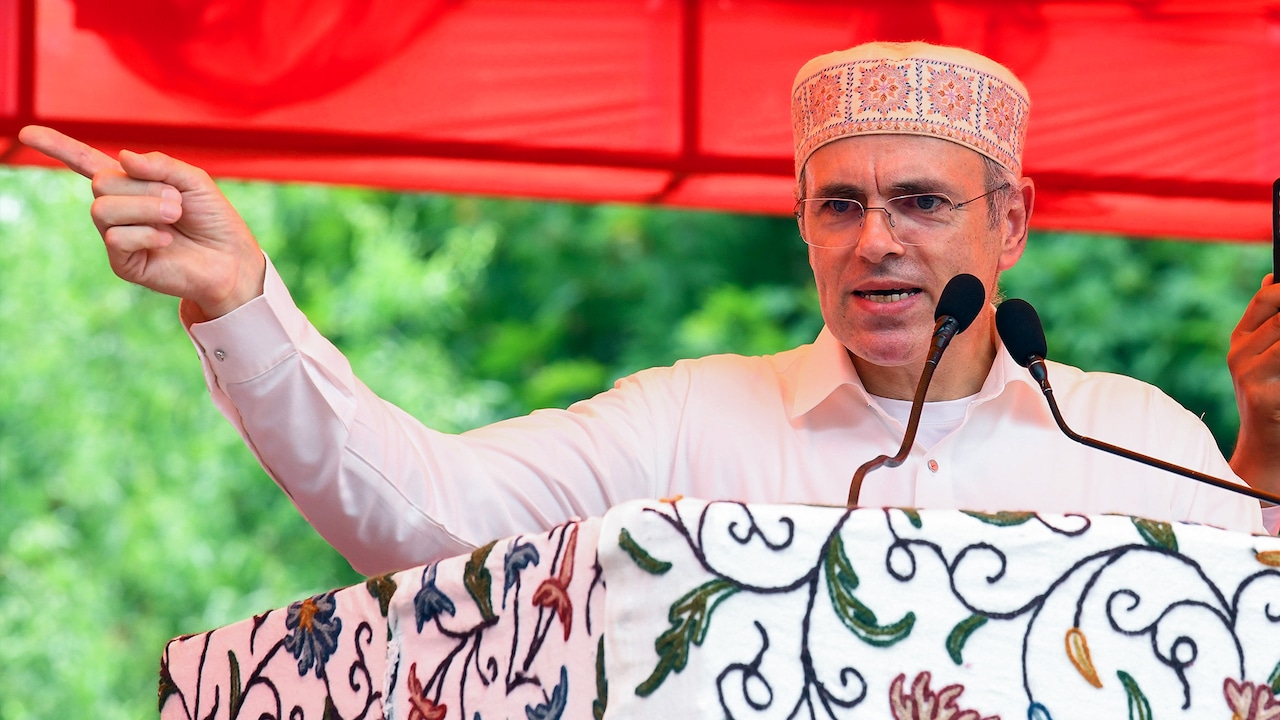
Former J&K chief minister Omar Abdullah labelled the LG administration as "temporary guests" and condemned restrictions on Martyrs' Day. He argued that the British‑era Kashmiri martyrs are ignored solely because they were Muslim, while the Maharaja under British paramountcy was non‑Muslim.
मुख्य बिंदु (Key Takeaways)
- Omar Abdullah calls LG administration "temporary guests"
- Martyrs' Day restrictions framed as religious bias
- Calls for revisiting British‑era Kashmiri martyrs' legacy
Former Jammu & Kashmir chief minister Omar Abdullah launched a scathing attack on the Lieutenant Governor (LG) administration on June 25, the day traditionally observed as Martyrs' Day. He asserted that the government's limited celebrations and security restrictions are driven by the fact that most of the martyrs were Muslim, whereas the Maharaja who ruled under British paramountcy was non‑Muslim.
Background of Martyrs' Day
Martyrs' Day commemorates the Kashmiri freedom fighters who gave their lives opposing British rule and the princely state's collaboration with it. Prior to the 1947 Partition, many Kashmiri insurgents rose against Maharaja Hari Singh's policies and the British‑appointed administration. Their sacrifices are usually honoured with large public gatherings, but recent years have seen heightened security measures that curtail these events.
Abdullah's Critique
Labeling the LG as "temporary guests," Abdullah suggested the administration lacks genuine commitment to the Kashmiri populace. He further claimed that the marginalisation of these martyrs stems from their religious identity, not from any legitimate security concerns. This criticism has amplified existing tensions in the valley, where civil society groups are demanding a more balanced historical narrative.
Historical Context and Potential Implications
The British‑era insurgents fought for autonomy and justice rather than religious motivations. Abdullah's remarks raise the question of whether the current government is reshaping historical facts for political expediency. Ignoring the controversy could deepen public resentment, potentially sparking larger protests and destabilising an already fragile peace process.
Way Forward
Security experts argue that restrictions on Martyrs' Day should be reassessed with cultural sensitivity. They recommend an inclusive ceremony that respects historical neutrality and religious equality, thereby fostering communal harmony. Such an approach would not only honour the martyrs but also reinforce the broader peace initiatives in Kashmir.