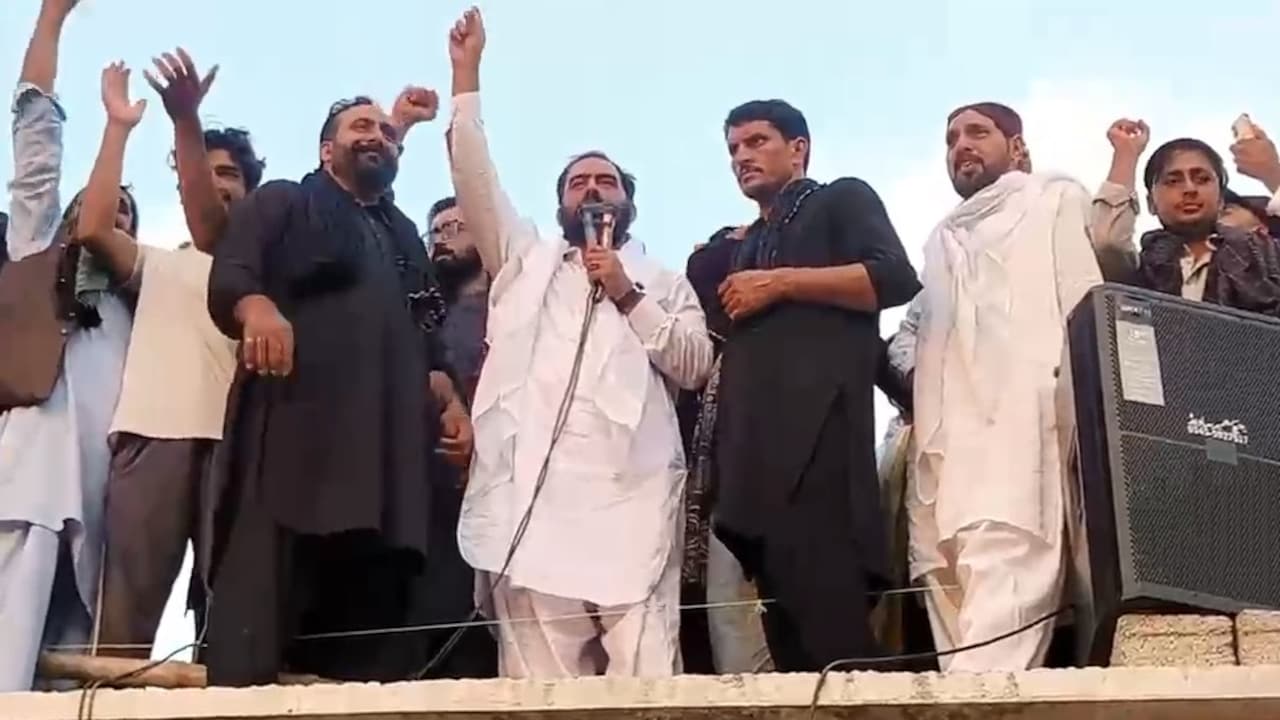
Addressing a massive gathering at Eidgah Ground, movement leader Sardar Aman Khan challenged Pakistan's decades-old narrative by declaring PoK as an occupied territory. He rejected the labels of 'Azad' and 'disputed', sparking a significant political discourse.
Key Takeaways
- Sardar Aman Khan declared PoK as 'occupied' territory, rejecting Pakistan's 'Azad' narrative.
- The speech was delivered before thousands at Eidgah Ground, highlighting local dissent.
- This development challenges Islamabad's administrative control and exposes human rights concerns in the region.
Addressing a massive gathering of thousands at the historic Eidgah Ground, prominent movement leader Sardar Aman Khan delivered a fiery speech that has sent shockwaves through the political landscape of Pakistan-occupied Kashmir (PoK). In a bold rejection of the official stance maintained by Islamabad for decades, Khan unequivocally declared that the region is neither "Azad" (free) nor "disputed," but is, in fact, an "occupied territory."
Challenging the State Narrative
Khan’s address strikes at the very heart of Pakistan's geopolitical propaganda regarding the region. For years, the term 'Azad Kashmir' has been used by Pakistan to project an image of autonomy and freedom on the international stage, often countering India's claims over the territory. However, Khan dismantled this narrative by pointing out the ground realities. He argued that true freedom cannot exist where the local populace is stripped of basic political rights and where the region is governed through remote control by Islamabad. His assertion that the land is 'occupied' resonates deeply with the grievances of the local people who have long felt marginalized under Pakistani administration.
Historical Context and Grievances
The region, which came under Pakistan's control following the ceasefire of 1949, has existed in a constitutional limbo. While it has its own president and prime minister, real power has historically rested with the 'Kashmir Council' in Islamabad, dominated by the Pakistani prime minister and federal bureaucracy. This structural inequality has fueled resentment among locals like Khan, who demand genuine self-governance. The rally at Eidgah Ground serves as a testament to the fact that the patience of the local population is wearing thin, and the demand for recognition of their plight is growing louder.
Geopolitical Implications
This development holds significant implications for the broader discourse on Kashmir. As local leaders begin to openly defy the state's narrative, it exposes the fragility of Pakistan's hold over the region. It also provides a new dimension to the international understanding of the Kashmir conflict, shifting the focus from a bilateral territorial dispute to a issue of indigenous human rights and political freedom within the territories controlled by Pakistan. Khan's courageous stance is likely to inspire further dissent and calls for democratic reforms in the region.