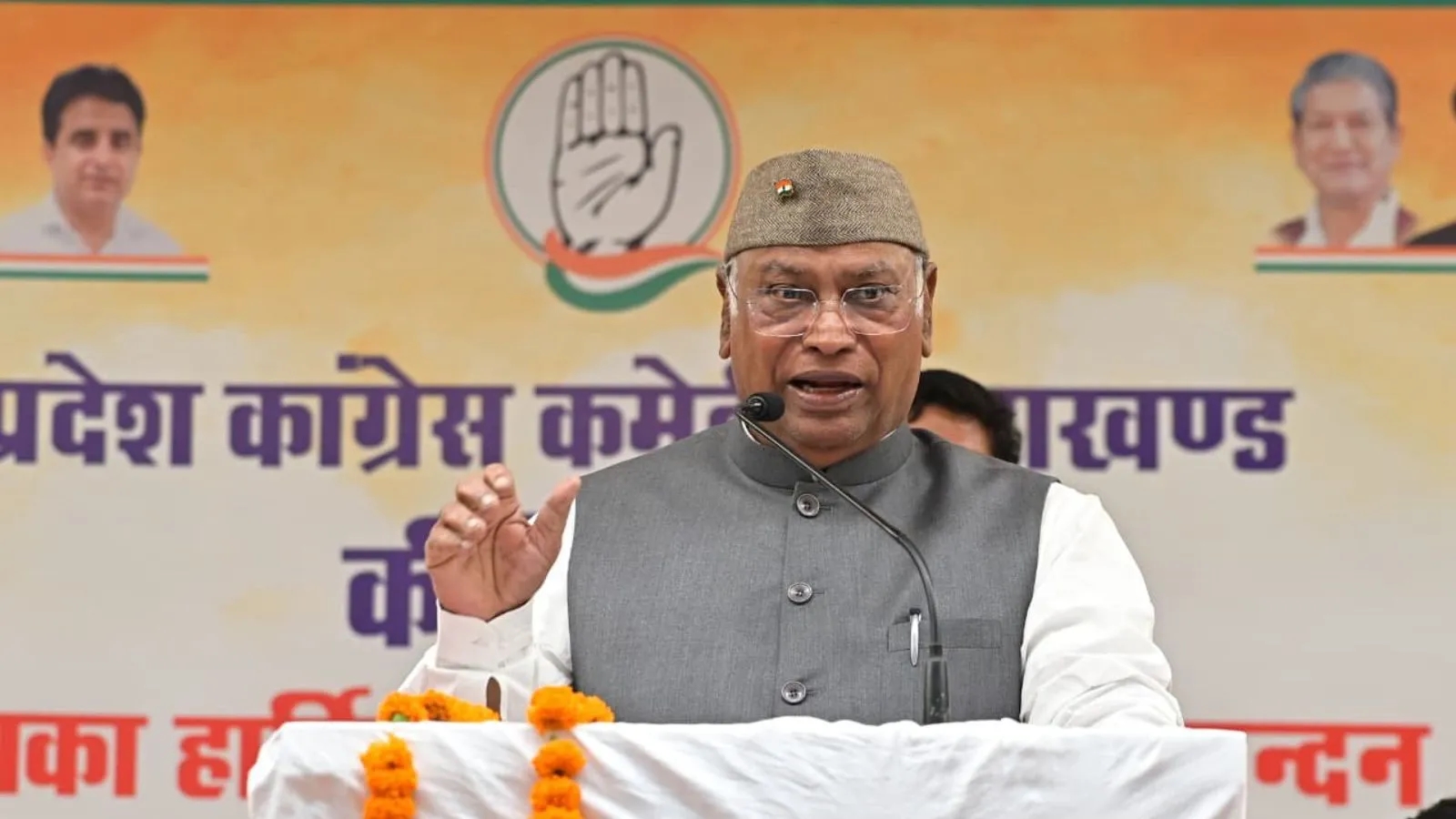
A controversial 'purification' ritual following Mallikarjun Kharge's rally in Haldwani has ignited a political firestorm. With elections looming in Uttarakhand, Punjab, and UP, both BJP and Congress are aggressively courting the crucial Scheduled Caste (SC) electorate.
- A 'shuddhikaran' (purification) ritual at Haldwani's Ramlila Maidan after a Congress rally has sparked national outrage.
- The controversy is impacting electoral strategies in Uttarakhand, Punjab, and Uttar Pradesh.
- BJP and Congress are leveraging the incident to claim the mantle of the true protector of Dalit rights.
The political climate in North India has reached a boiling point following an alleged “shuddhikaran havan” (purification ritual) conducted at the Ramlila Maidan in Haldwani, Uttarakhand. The ritual, performed by the Shri Ram Sena Dharmarth Seva Nyas, took place shortly after a rally led by Congress National President Mallikarjun Kharge on August 8. This act has been interpreted by many as a direct insult to the Dalit community, given Kharge's identity and the symbolic nature of 'purification' rituals.
The ruling BJP has attempted to deflect the controversy by accusing the Congress of opportunistic politics. BJP National President Nitin Nabin recently visited Haldwani, asserting that the Congress has a long history of insulting Dalit icons like B.R. Ambedkar and Babu Jagjivan Ram, suggesting that the party merely uses the community as a 'vote bank'. Meanwhile, the Congress is positioning itself as the only party truly committed to the empowerment of the Scheduled Castes.
Why This Matters
BozokMedia analysis shows that this is not merely a local dispute but a strategic calculation for the 2027 Assembly elections. In states like Uttarakhand, Punjab, and Uttar Pradesh, the Dalit vote is often the 'swing factor'. The BJP's dominance in SC-reserved seats in Uttarakhand and the AAP's surge in Punjab demonstrate that the community's loyalty is fluid and highly sensitive to issues of dignity and social justice.
The 'purification' row serves as a catalyst for Dalit consciousness, forcing political parties to move beyond tokenism toward substantive representation.
In Uttarakhand, the stakes are high with 13 SC-reserved seats. While the BJP won 11 of these in 2017, their tally dipped to nine in 2022, while Congress doubled its hold to four. This shift indicates a vulnerability that the Congress hopes to exploit using the Haldwani incident. The ripples are expected to extend to Punjab, where Dalits constitute 32% of the population, and Uttar Pradesh, where 84 seats are reserved for SC candidates.
Historically, the BJP has successfully penetrated the Dalit vote bank in UP, significantly eroding the base of the Bahujan Samaj Party (BSP). However, the current controversy provides the Congress with a narrative of 'social exclusion' that could resonate with voters who feel marginalized by the current administration's ideological leanings.
| State | SC Reserved Seats | Dalit Pop % (Approx) | Key Political Trend |
|---|---|---|---|
| Uttarakhand | 13 | N/A | BJP Dominant, Congress Gaining |
| Punjab | 34 | 32% | AAP Surge, Congress Decline |
| Uttar Pradesh | 84 | 21% | BJP Hegemony, SP Rising |
Frequently Asked Questions
Q1: What triggered the Haldwani purification row?
The row began when a religious group performed a 'shuddhikaran' (purification) ritual at a ground where Congress President Mallikarjun Kharge had recently held a rally.
Q2: Why is this significant for the 2027 elections?
Because the Dalit community holds significant voting power in Uttarakhand, UP, and Punjab, and this incident has become a symbol of caste-based dignity and political identity.