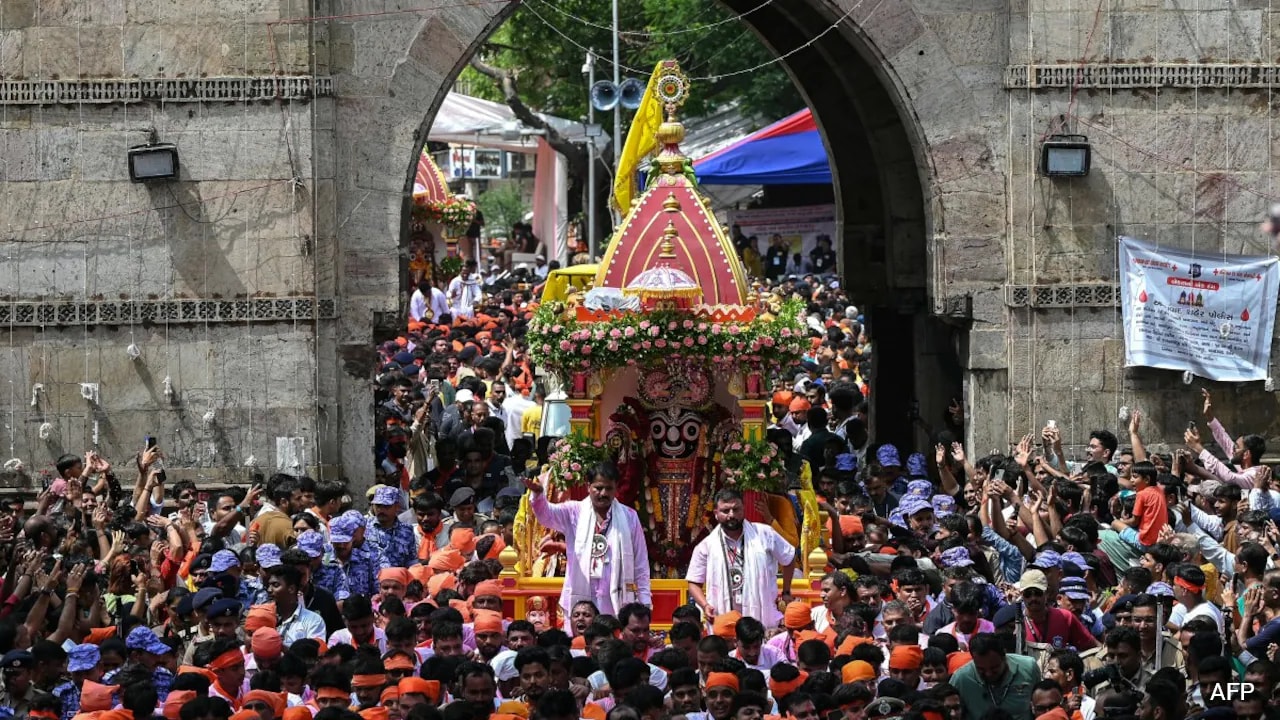
A sudden surge in the crowd during Puri's Rath Yatra resulted in two deaths and 78 injuries. After a security review, the chariot will be pulled again today.
मुख्य बिंदु (Key Takeaways)
- 2 dead, 78 injured in Rath Yatra crowd surge
- Chariot pulling to resume today after safety review
- Authorities announce stricter crowd‑control measures for future events
In Odisha’s coastal city of Puri, the annual Rath Yatra turned tragic when a sudden crowd surge caused the death of two devotees and injured 78 others. Thousands of pilgrims had gathered around the massive chariot when a dense wave of people pushed forward, crushing those at the front.
Details of the Incident
According to police and emergency responders, the incident occurred on the evening of August 23. Witnesses reported that the crowd pressure intensified abruptly near the chariot, causing people to be trampled and fall. Two victims were declared dead at the scene, while 78 were rushed to nearby hospitals with injuries ranging from minor bruises to serious fractures.
Historical Significance of Rath Yatra
The Rath Yatra, a 11‑day procession that carries Lord Jagannath on a towering chariot, is one of India’s most celebrated religious festivals. Each year, millions converge on Puri, as well as nearby towns like Gopalpur, to witness the spectacle. Although past editions have seen minor mishaps, this year’s casualty count has heightened concerns over crowd‑management practices.
Authorities’ Response
Odisha police immediately halted the chariot’s movement and launched a full investigation. After conducting a rapid safety audit, the state government announced that the chariot would resume its journey today, with additional security forces, drone surveillance, and reinforced barriers to manage the flow of pilgrims.
Future Safety Measures
Officials have pledged to introduce stricter protocols for large‑scale religious gatherings, including digital ticketing, real‑time crowd analytics, and coordinated efforts with local municipal bodies. Security experts argue that such systematic reforms are essential to prevent similar tragedies in the future.