After a refrigerator-sized satellite named 'Link' spun out of control in orbit, engineers from Katalyst Space Technologies are scrambling to regain control. The startup remains optimistic about capturing NASA's $500 million Swift observatory despite severe hardware failures.
Key Takeaways
- Katalyst Space Technologies' 'Link' satellite suffered a critical spin anomaly and reaction wheel failure in orbit.
- The satellite is part of a $30 million NASA contract to rescue the $500 million Swift gamma-ray observatory.
- Engineers are actively working on a recovery plan and believe the mission is still highly salvageable.
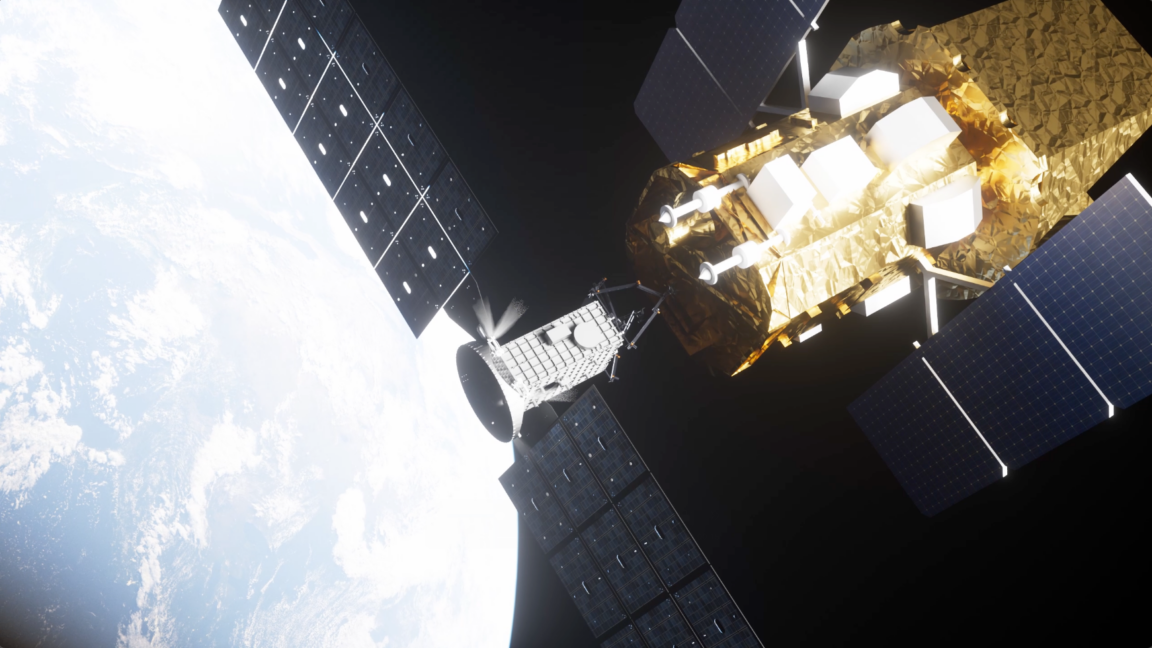
A high-stakes drama is unfolding more than 200 miles above Earth. A refrigerator-sized satellite, sent on a critical rescue mission to save NASA's $500 million Swift gamma-ray observatory, has suddenly spun out of control. The spacecraft, named Link, began rotating on multiple axes, severely disrupting its communication link with ground control and complicating recovery efforts.
According to telemetry data, two of the satellite's three reaction wheels—essential components used for precise pointing and stabilization—have stopped working. Additionally, engineers discovered anomalies within the spacecraft's cold gas thrusters, which are vital for fine attitude control. The Link satellite was built and is operated by Katalyst Space Technologies, an aerospace startup that secured a $30 million NASA contract for this daring rescue.
Why This Matters
BozokMedia analysis shows that this mission is a crucial test case for the burgeoning in-orbit servicing, assembly, and manufacturing (ISAM) sector. If Katalyst can successfully recover the spinning Link satellite and complete the rescue of Swift, it will validate commercial satellite-servicing capabilities. Conversely, a failure could raise regulatory and financial questions about relying on early-stage startups for high-value national scientific assets.
"We believe that a capture of Swift, an attempted capture of Swift, is very much in the cards." - Katalyst Engineering Team
Despite the daunting technical hurdles, the engineering team has not lost hope. They are utilizing sporadic radio contact to upload new software commands and stabilize the spacecraft. The ultimate goal remains to rendezvous with the Swift observatory, secure a physical connection, and boost its orbit to counteract aerodynamic drag before the Link satellite eventually burns up in the atmosphere.
Historical Background
NASA's Swift observatory, launched in 2004, has been a cornerstone of high-energy astrophysics, detecting gamma-ray bursts—the universe's most powerful explosions. Over two decades of operation have degraded its orbit. The partnership with Katalyst represents a modern trend where NASA leverages cost-effective commercial solutions rather than building bespoke, multi-hundred-million-dollar government rescue missions.
| Feature | Swift Observatory | Link Satellite |
|---|---|---|
| Primary Mission | Gamma-ray burst detection | Orbit boosting (Rescue) |
| Project Cost | $500 Million | $30 Million (Contract value) |
| Current Status | Operational, decaying orbit | Spinning anomaly, recovery underway |
Frequently Asked Questions
1. What is the main objective of the Link satellite?
The Link satellite is designed to rendezvous with NASA's aging Swift observatory, latch onto it, and boost its orbit to extend its operational lifespan.
2. Can the satellite still be saved?
Yes. Despite losing two reaction wheels and experiencing thruster issues, engineers believe they can reprogram the attitude control system to stop the spin and proceed with the mission.