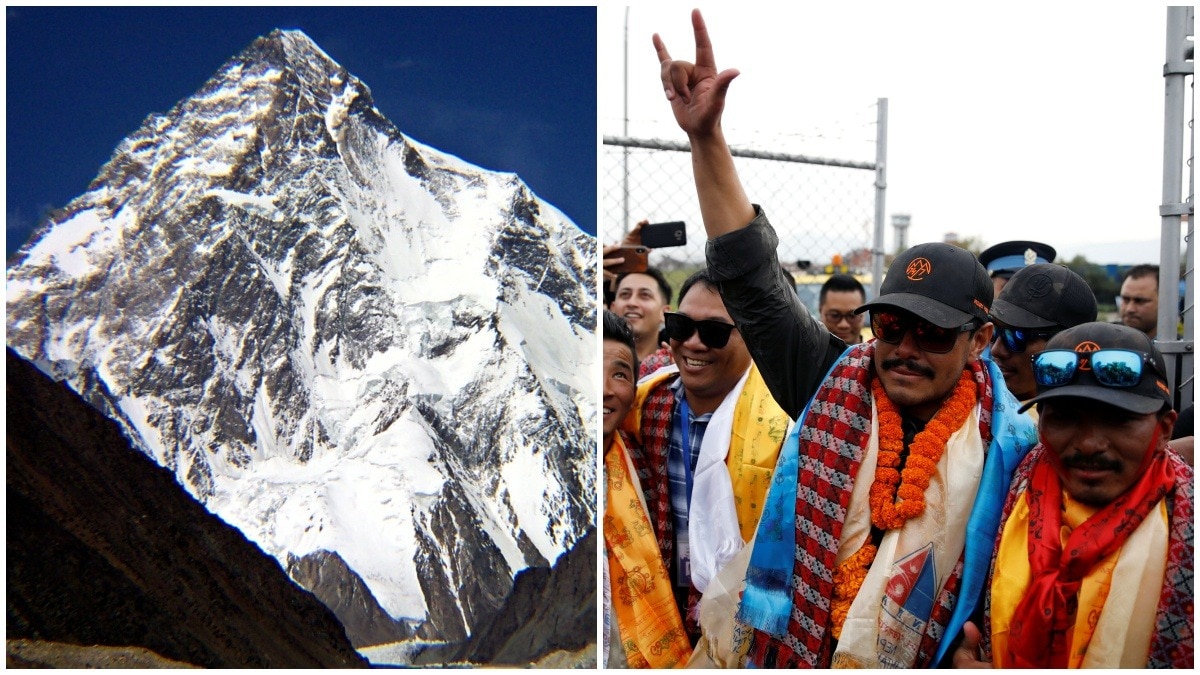
Legendary mountaineer Nirmal 'Nimsdai' Purja has passed away following a devastating avalanche on Broad Peak. His death highlights the extreme perils of the Karakoram range and the brutal reality of climbing K2.
Key Takeaways
- Renowned Nepali climber Nirmal 'Nimsdai' Purja confirmed dead after an avalanche on Broad Peak.
- Purja famously climbed all 14 8,000m peaks in just 6 months and 6 days in 2019.
- K2 is technically more demanding than Everest due to steeper slopes and unstable ice.
- Winter climbing on K2 involves extreme temperatures below -50°C and hurricane-force winds.
The mountaineering world is in mourning following the confirmation that legendary Nepali climber Nirmal 'Nimsdai' Purja has died. According to a statement from Elite Exped, Purja was caught in a devastating avalanche on Broad Peak in the Karakoram range. The news comes two days after he was reported missing, marking a tragic end to a career defined by unprecedented feats.
The Lethal Reality of K2
Purja’s passing has reignited the debate regarding the sheer difficulty of the Karakoram peaks. While Mount Everest holds the title of the world's highest peak, K2 is widely regarded by experts as the more dangerous adversary. The mountain is characterized by its technical complexity, steeper inclines, and unpredictable weather patterns.
Why This Matters
BozokMedia analysis shows that Purja was not just a climber, but a global icon who revolutionized high-altitude mountaineering. His ability to shatter records served as a testament to human endurance. His death serves as a somber reminder that even with elite training and cutting-edge gear, the mountains remain indifferent to human achievement.
K2 is a technical masterpiece of terror where the margin for error is practically non-existent.
One of the most perilous sections of K2 is the 'Bottleneck', a narrow passage at approximately 8,200 meters. Climbers must navigate beneath massive, unstable hanging glaciers known as seracs. Combined with the 'Death Zone'—where oxygen levels are only a third of those at sea level—the physical and mental toll is immense.
The Brutality of Winter Expeditions
Climbing K2 in winter is an entirely different beast. Temperatures can plummet to -50°C, and the subtropical jet stream brings winds exceeding 150 kmph. Purja himself made history in January 2021 as part of the first team to successfully summit K2 in winter, a feat once thought impossible.
Frequently Asked Questions
1. What made Nirmal Purja famous?
He gained global fame for completing all 14 of the world's highest mountains (above 8,000m) in a record-breaking 6 months and 6 days.
2. Why is K2 considered harder than Everest?
K2 features much steeper slopes, more technical climbing routes like the Bottleneck, and a higher frequency of avalanches and rockfalls.