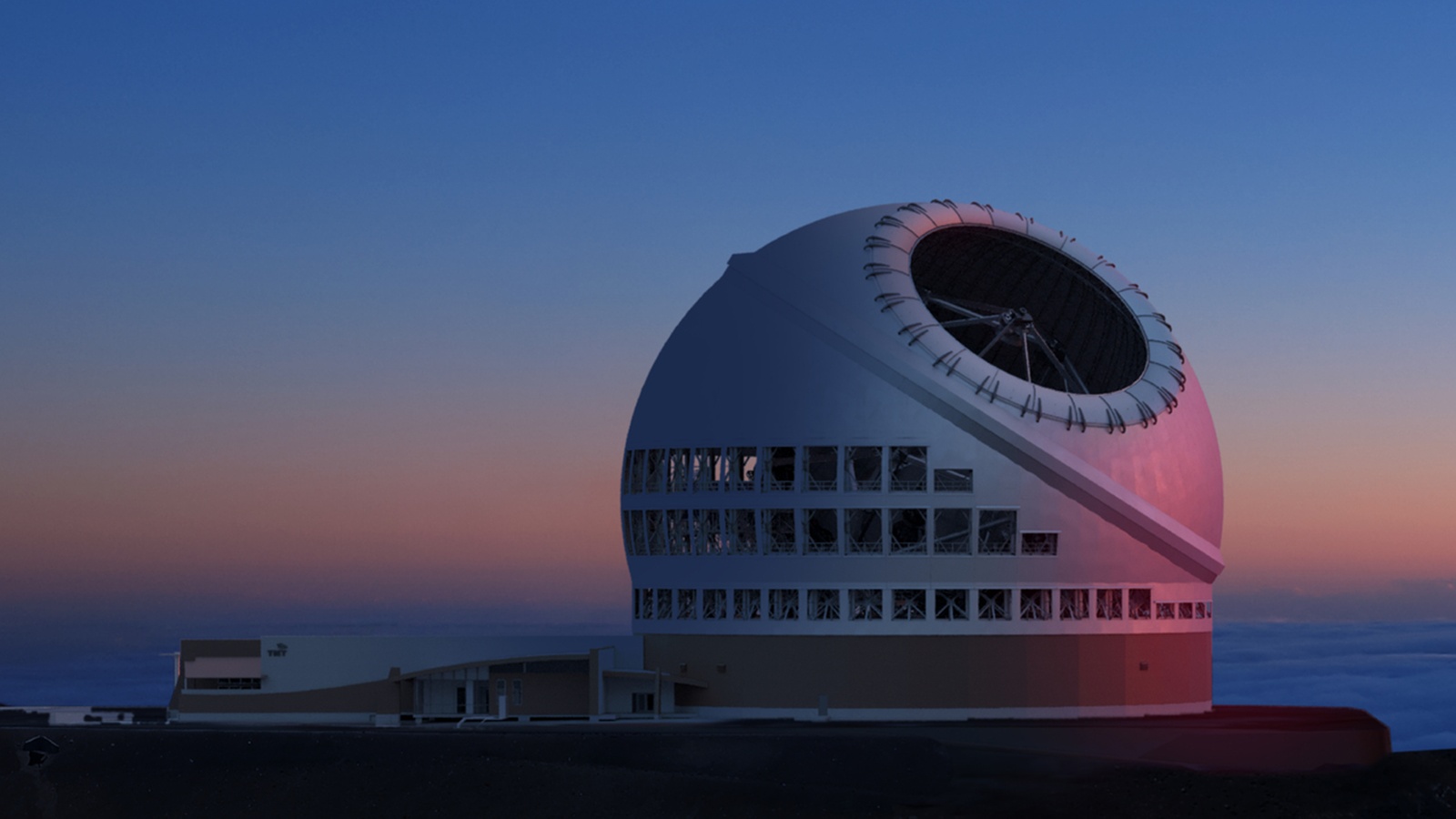
The Spanish government and the EIB have announced a massive €1 billion mobilization for the construction of the Thirty Metre Telescope (TMT). India is set to play a critical role, contributing 10% of the costs and manufacturing key optical components.
Key Takeaways
- Spain and EIB to mobilize up to €1 billion for the TMT project.
- The telescope will be located at the Roque de los Muchachos Observatory in La Palma, Spain.
- India is a key consortium member, committing 10% of costs and providing high-precision mirror segments.
- TMT aims to study cosmology, black holes, and the early formation of the universe.
In a landmark move for global astronomy, the Spanish government, in partnership with the European Investment Bank (EIB), has announced the mobilization of up to one billion Euro for the construction of the Thirty Metre Telescope (TMT). As the world's largest planned optical telescope, this project promises to redefine our understanding of the cosmos. The TMT International Observatory is slated to be built at the prestigious Roque de los Muchachos Observatory in La Palma, Spain.
The project involves an international consortium including the US, Canada, Japan, China, and India. India’s involvement is deeply strategic; since joining the consortium in 2014, India has committed to contributing 10% of the total costs (approximately ₹1,300 crore). Beyond funding, India will be a manufacturing powerhouse for the project, producing 84 ground and polished mirror segments, precision actuators, and Segment Support Assemblies (SSA) required to align the 492 hexagonal mirrors.
Why This Matters
BozokMedia analysis shows that the TMT represents a paradigm shift in observational astronomy. By providing a massive surface area to capture faint celestial signals, the telescope will allow scientists to peer back in time to the early formation of galaxies and study the enigmatic nature of black holes. This isn't just about a bigger lens; it's about accessing data that was previously physically impossible to retrieve.
The TMT is not just an instrument; it is a time machine that will allow us to witness the very dawn of the universe.
The journey to La Palma has not been without hurdles. Originally planned for Mauna Kea in Hawaii, the project faced significant opposition from local communities, leading to years of legal battles. Following this, the consortium pivoted to Spain, where the scientific excellence of the La Palma site offers a superior environment for long-term sustainability and observation. Spanish Minister Diana Morant emphasized that the current financial architecture ensures the project's economic viability.
Comparison: Project Evolution
| Feature | Original Plan (Hawaii) | Current Plan (Spain) |
|---|---|---|
| Location | Mauna Kea, Hawaii | La Palma, Spain |
| Primary Obstacle | Local community opposition | Relocation and logistical scaling |
| Status | Halted/Stalled | Active Financial Mobilization |
Frequently Asked Questions
1. What is India's specific technical contribution to TMT?
India is manufacturing 84 mirror segments and critical opto-mechanical assemblies like precision actuators and edge sensors.
2. Why was the telescope moved from Hawaii to Spain?
Due to strong local objections and long-standing legal battles in Hawaii, the consortium decided to move the site to the scientifically excellent La Palma in Spain.