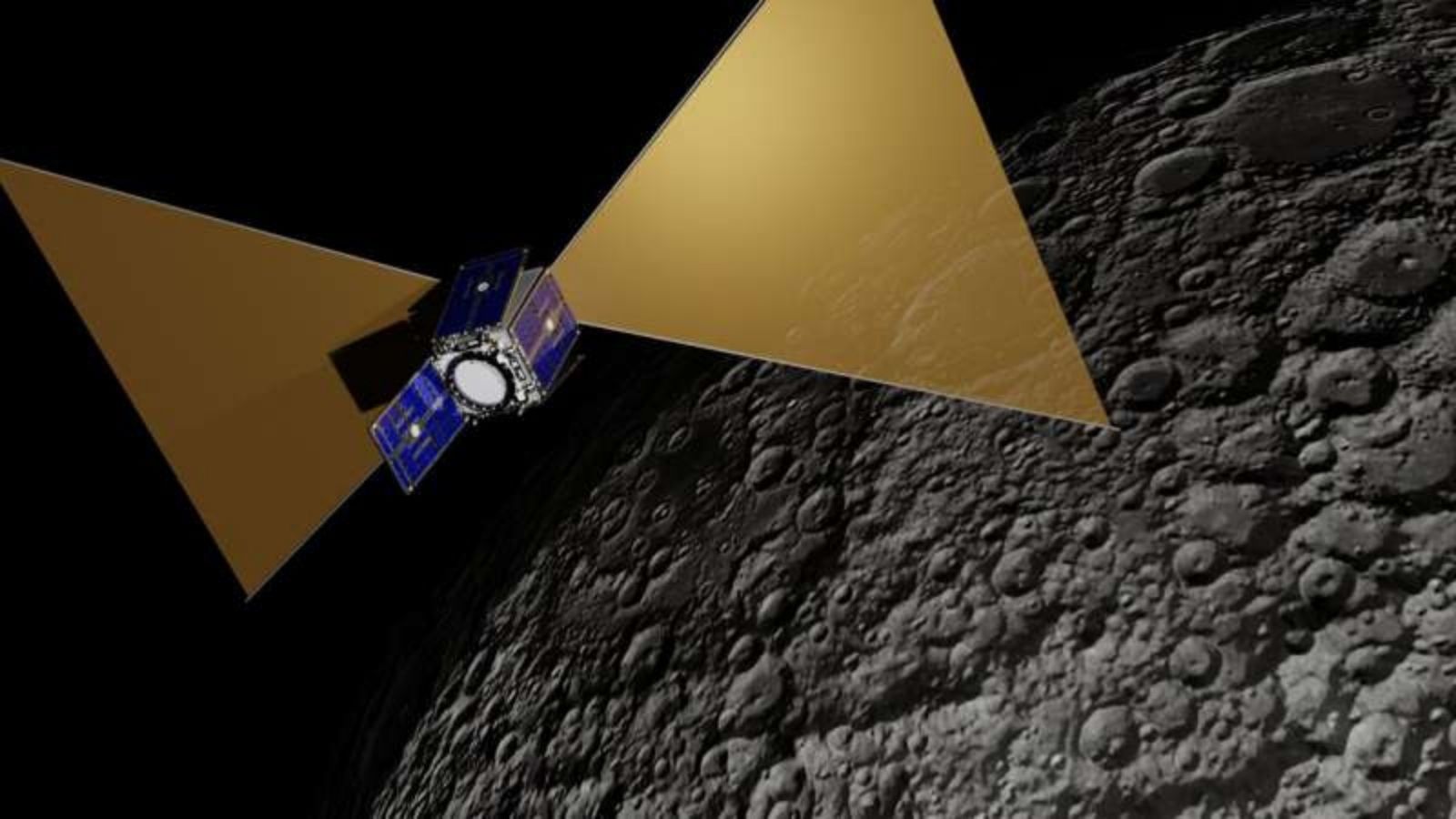
A proposed suitcase-sized satellite called CosmoCube aims to use the far side of the Moon as a radio shield to detect faint signals from the universe's earliest stages, predating the first stars.
- CosmoCube is a compact satellite designed to operate in lunar orbit.
- It leverages the Moon's far side to block Earth-based radio interference.
- The mission targets the '21-centimetre line' signal from 13.5 billion years ago.
In a bold attempt to bridge the gap in our understanding of the early universe, an international team of researchers has proposed the CosmoCube mission. This suitcase-sized spacecraft is designed to listen for faint radio signals originating from more than 13.5 billion years ago, offering a rare glimpse into the era before the first stars were ever born.
The Challenge of the Cosmic Dark Age
Following the Big Bang, the universe entered a phase known as the Cosmic Dark Age, lasting roughly 150 million years. During this period, while stars had not yet ignited, the universe was permeated with hydrogen. These hydrogen atoms emitted a specific, low-frequency radio signal known as the 21-centimetre line, which contains vital data about the conditions of the primordial universe.
Detecting this signal from Earth is nearly impossible. The Earth's ionosphere acts as a barrier to these low-frequency waves, and the modern world's cacophony of FM radio, satellite transmissions, and telecommunications creates a 'radio fog' that drowns out the ancient cosmic whispers.
Why This Matters
BozokMedia analysis shows that CosmoCube represents a strategic shift toward 'miniaturized' deep-space science. By utilizing the Moon as a physical barrier, the mission bypasses the limitations of Earth-based observatories. If successful, this could provide the first empirical evidence of how dark matter's gravitational pull coalesced hydrogen into the first galactic structures, effectively mapping the transition from darkness to light.
"The far side of the Moon offers a unique combination of protection from Earth’s radio interference and a broad view of space." - Eloy de Lera Acedo, University of Cambridge.
The Moon as a Natural Shield
The CosmoCube mission proposes placing the spacecraft in a lunar orbit. As it passes behind the Moon's far side, the lunar mass blocks all radio noise originating from Earth. This creates a 'radio-quiet zone,' allowing the sensitive instruments to pick up the 21-centimetre line without interference.
During every two-hour orbit, the satellite would spend approximately 40 minutes in this shielded zone. Over a projected two-year mission, the team expects to gather roughly 1,000 hours of high-fidelity data at extremely low frequencies.
| Feature | Earth-Based Telescopes | CosmoCube (Lunar Mission) |
|---|---|---|
| Radio Noise | High (Human-made interference) | Ultra-Low (Shielded by Moon) |
| Ionosphere Effect | Blocks low-frequency waves | No interference (Vacuum of space) |
| Observation Target | Modern Galaxies/Stars | The Cosmic Dark Age |
Technical Hurdles and Timeline
Despite its small size, the spacecraft requires sophisticated engineering to ensure that its own internal electronics do not create noise that could be mistaken for a cosmic signal. The design includes lightweight radio antennas and rigorous self-positioning checks to filter out local interference.
The team believes the mission could be launch-ready within five years. However, there is a looming concern: the lunar far side is becoming a prime target for other nations, including the US and India. As more infrastructure is built on the Moon, the pristine radio silence required for CosmoCube may be compromised.
Frequently Asked Questions
1. What is the primary goal of CosmoCube?
To detect the 21-centimetre radio signal from the Cosmic Dark Age to understand how the first stars and galaxies formed.
2. Why can't we do this with telescopes on Earth?
Earth's ionosphere blocks the necessary low-frequency waves, and human-made radio noise is too loud to hear the faint cosmic signals.