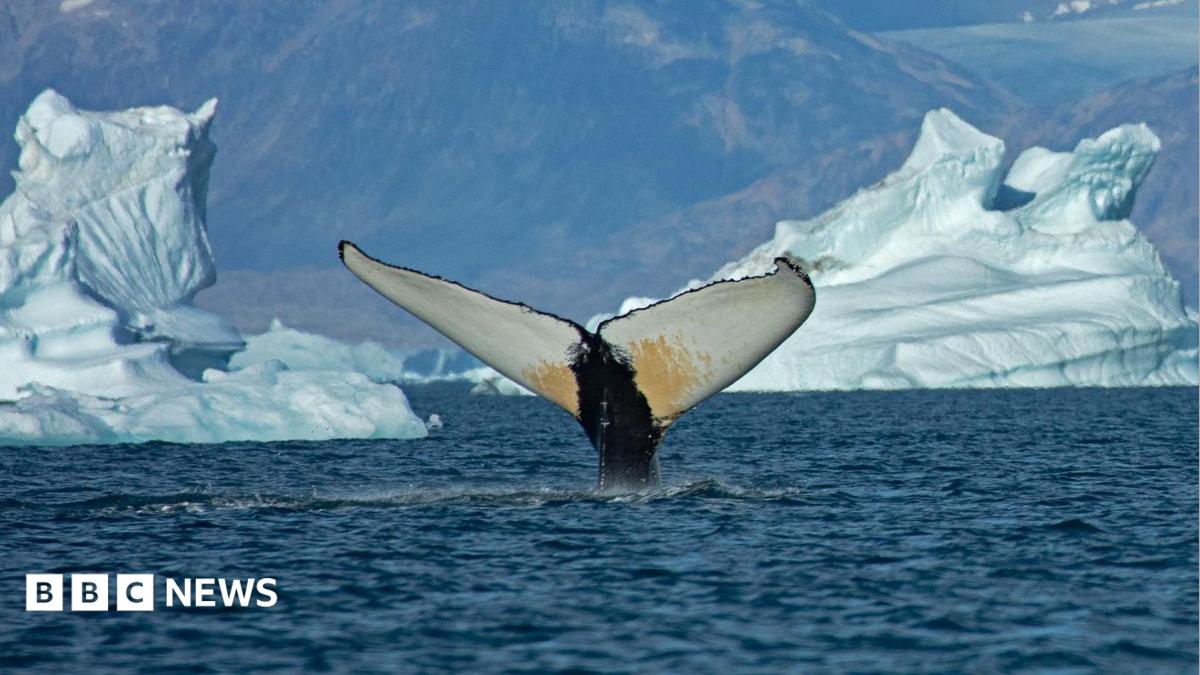
Melting sea ice due to global warming has opened up previously inaccessible Greenland waters, leading to massive 'feeding frenzies' of humpback and fin whales.
- Melting sea ice in East Greenland is creating new feeding grounds for massive whale species.
- Species like humpback, minke, and fin whales are migrating into previously ice-locked coastal areas.
- While some species adapt, native Arctic animals like narwhals are facing habitat loss.
A decades-long study has revealed a dramatic ecological shift in East Greenland. As rising global temperatures cause sea ice to vanish, giant whales are moving into previously inaccessible waters to take advantage of new feeding opportunities. This phenomenon, described by scientists as seasonal Arctic "feeding frenzies," marks a major regime shift in the marine environment.
The scale of this migration is staggering. Historically, these waters were locked by thick ice, preventing large marine mammals from entering. However, recent data shows a massive influx. Ship-based surveys recorded zero humpback whale sightings in the region until 2006. By 2024, that number surged to 150 sightings, signaling a profound change in migratory patterns.
Why This Matters
BozokMedia analysis shows that this movement is driven by a complex interplay of temperature and food availability. As the ocean warms, fish populations are shifting, providing a massive feast for baleen whales. It is estimated that the three primary whale species—humpback, fin, and minke—consume at least 800,000 tonnes of fish and krill during a single summer feeding season.
Prof. Mads Peter Heide-Jørgensen notes that these changes are probably the most radical observed anywhere in the subarctic.
The study, published in Frontiers in Marine Science, utilized satellite-tagged whales, aerial surveys, and testimony from Inuit hunters to construct a comprehensive picture of this ecological upheaval. In the summer of 2024 alone, an estimated 4,000 humpback, 6,000 fin, and 6,000 minke whales visited the Greenland Sea.
Winners and Losers in the Arctic
The ecological shift is not a win-win scenario. While "opportunistic" species like humpbacks are thriving in the warming waters, native Arctic species are struggling. Animals such as narwhals and belugas are facing intense competition and are being displaced from their traditional habitats by these incoming giants.
| Whale Species | Estimated Summer Visitors (2024) | Impact of Warming |
|---|---|---|
| Humpback | ~4,000 | High Benefit (New Feeding Grounds) |
| Fin Whale | ~6,000 | High Benefit (Increased Food) |
| Minke Whale | ~6,000 | High Benefit (Increased Food) |
Frequently Asked Questions
1. Is the whale population actually increasing?
The study does not confirm a total population increase; it may simply be a redistribution of whales from other areas to the warming Greenland waters.
2. How does this affect indigenous communities?
The influx of whales from West Greenland is a sensitive issue in Greenland, where certain whale species are part of traditional hunting practices.