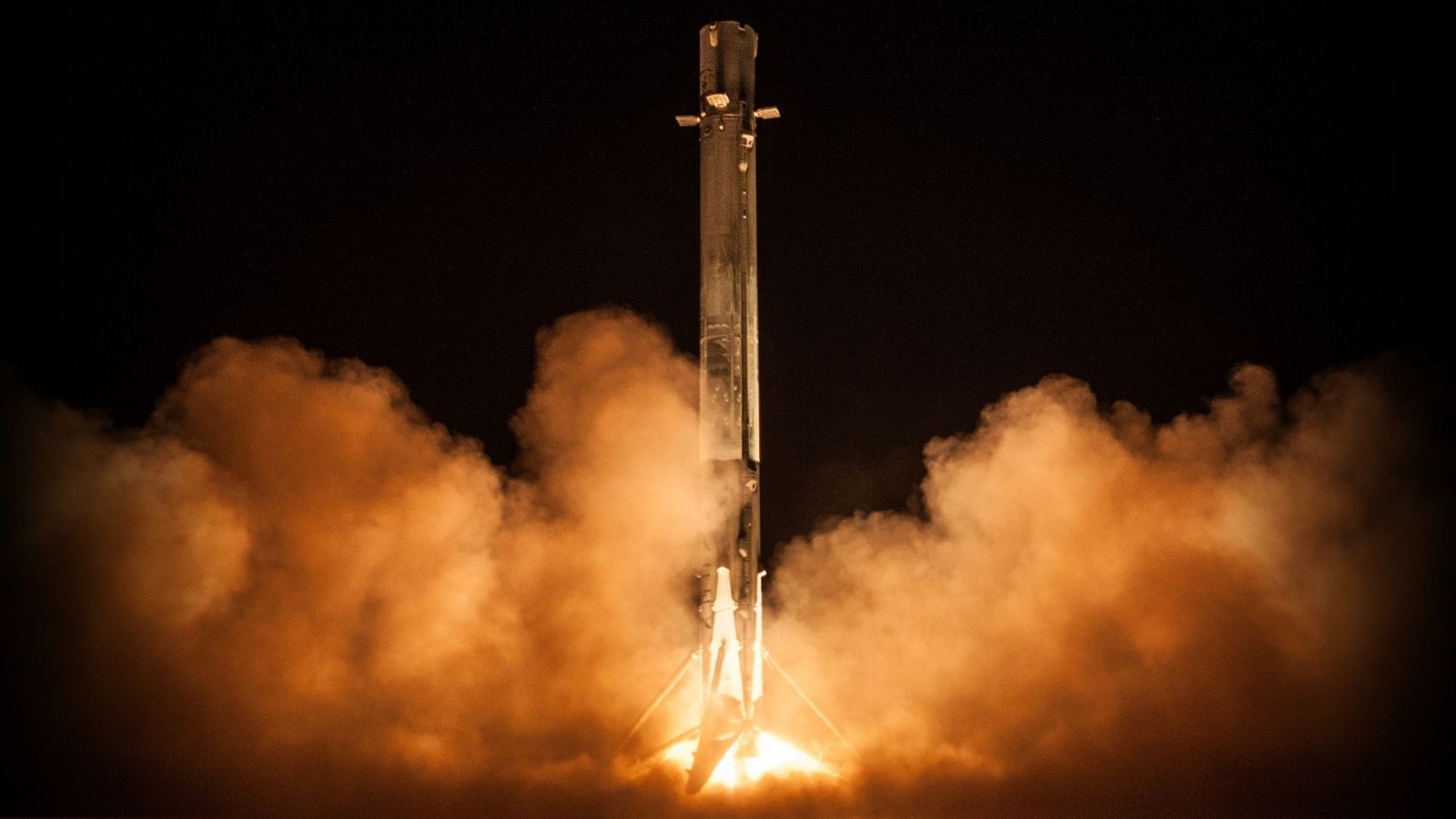
SpaceX successfully deployed 27 Starlink satellites into low Earth orbit, marking its 100th Falcon rocket mission of 2026 and demonstrating unprecedented launch cadence.
- SpaceX achieved its 100th Falcon rocket mission of 2026.
- 27 Starlink internet satellites were successfully deployed into orbit.
- The Falcon 9 booster (B1100) completed its 9th successful flight.
In a massive display of aerospace dominance, SpaceX successfully launched 27 Starlink internet satellites into low Earth orbit on Saturday. This mission represents the 100th Falcon rocket mission of 2026, highlighting the company's aggressive and rapidly increasing launch cadence that is reshaping the global space industry.
The Falcon 9 rocket lifted off from the Vandenberg Space Force Base in California at 3.25 am EDT. This specific mission served as the 99th Falcon 9 launch of the year. While the only other Falcon mission in 2026 so far was a Falcon Heavy launch in April, reaching the 100-mission milestone this early in the year is a staggering achievement for Elon Musk's venture.
The Power of Reusability
A critical component of this mission's success was the recovery of the first-stage booster. Designated as B1100, the Falcon 9 booster performed a precision landing on a SpaceX drone ship in the Pacific Ocean approximately 8.5 minutes after liftoff. This marked the 9th successful flight for this particular booster, underscoring the economic and operational efficiency of SpaceX's reusable rocket architecture.
Why This Matters
BozokMedia analysis shows that SpaceX is effectively building a proprietary global infrastructure. By dedicating the vast majority of its launches—76 out of 99 Falcon 9 missions this year—to Starlink, SpaceX is creating a self-sustaining loop of launch revenue and global connectivity dominance that competitors struggle to match.
SpaceX's ability to iterate and reuse hardware at this frequency has fundamentally shifted the economics of space access.
The Starlink constellation has grown exponentially, with over 11,000 operational spacecraft currently providing high-speed internet worldwide. Looking ahead, SpaceX aims to deploy 100,000 next-generation Starlink V3 satellites, a feat intended to be accomplished using the upcoming Starship heavy-lift launch vehicle.
Historical Background
In 2025, SpaceX set an annual record of 165 Falcon launches. By hitting the 100-mission mark well before the end of 2026, the company is on a clear trajectory to potentially shatter its own previous records, further cementing its lead in the commercial space sector.
Frequently Asked Questions
Q1: How many Starlink satellites were in this launch?
A1: The mission carried 27 Starlink satellites into orbit.
Q2: Where did the rocket booster land?
A2: The Falcon 9 booster landed successfully on a SpaceX drone ship in the Pacific Ocean.