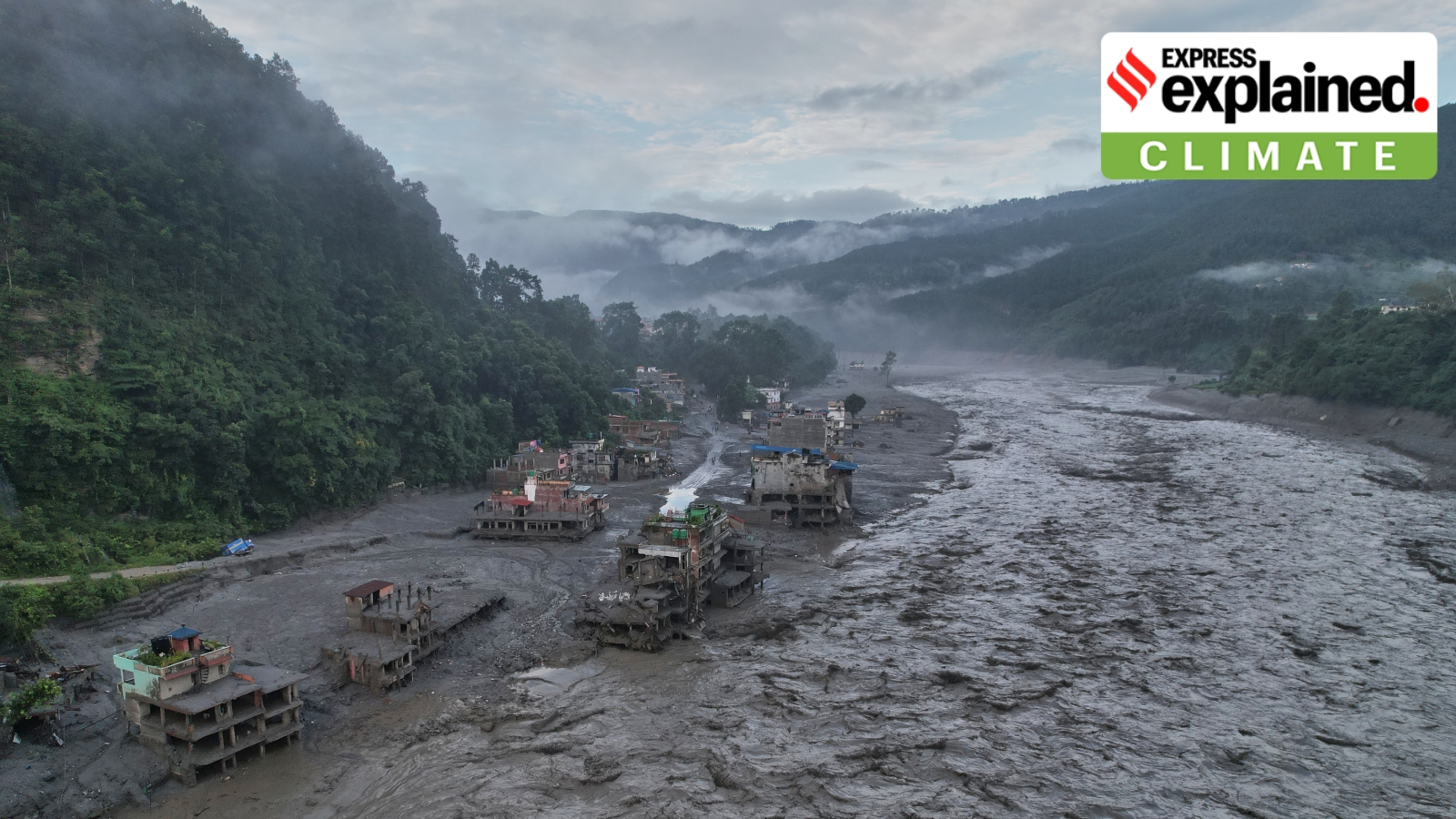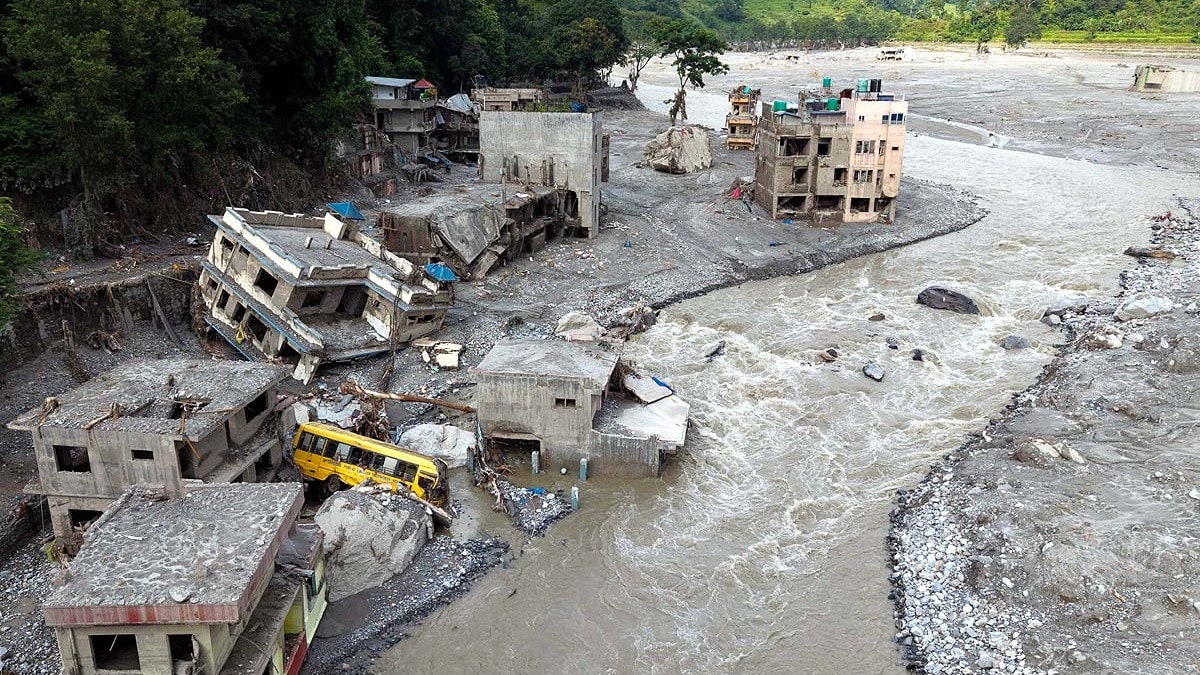
A massive glacier collapse on the Nepal-Tibet border has triggered a catastrophic flash flood, claiming at least 270 lives and leaving over 1,000 people missing in a trail of destruction.
- 270 confirmed dead and over 1,000 missing following a glacier burst at the Nepal-Tibet border.
- Massive destruction of villages, bridges, roads, and hydroelectric projects.
- Historical data shows Peru's 1970 disaster as the deadliest glacier event with 25,000 deaths.
- Increasing frequency of GLOFs in the Himalayas linked to rapid climate change.
New Delhi: Nature's fury has once again struck the high altitudes of the Himalayas. On Wednesday, a significant portion of a glacier collapsed on the border between Nepal and Tibet, sending a lethal torrent of ice, rocks, and debris cascading downstream. This sudden surge triggered massive flash floods that ravaged the Lhende Khola river basin and surrounding regions.
The scale of the disaster is immense, with official reports confirming at least 270 fatalities, while more than 1,000 people remain missing. Entire villages have been swept away, and critical infrastructure, including strategic roads, bridges, and power projects, has been completely demolished. Rescue operations are currently underway, though the treacherous terrain and ongoing instability of the slopes are hindering efforts.
Why This Matters
BozokMedia analysis shows that this event is a stark manifestation of the escalating climate crisis. The rapid melting of Himalayan glaciers is leading to the formation of unstable glacial lakes. When these natural dams breach—a phenomenon known as a Glacial Lake Outburst Flood (GLOF)—they create high-velocity surges of debris that are nearly impossible to survive. This highlights a critical vulnerability in the infrastructure development of high-altitude regions in South Asia.
"The instability of our glaciers is a planetary alarm bell; the mountains are no longer the static giants we once believed them to be."
A History of Glacial Catastrophes
This is not an isolated incident. History records several instances where collapsing glaciers have wiped out entire populations. The following table compares some of the most lethal events:
| Year | Location | Cause | Estimated Deaths |
|---|---|---|---|
| 1941 | Peru (Huaraz) | Glacial Lake Burst | 5,000 |
| 1962 | Peru (Mt. Huascaran) | Ice/Debris Avalanche | 4,000 |
| 1970 | Peru (Yungay) | Earthquake-induced Collapse | 25,000 |
| 1981 | Tibet-Nepal | Sirenma Co Lake Burst | 200 |
| 2021 | Uttarakhand (India) | Ronti Peak Collapse | 200+ |
| 2026 | Nepal-Tibet | Glacier Fragment Burst | 270+ |
The 1970 Peru disaster remains the deadliest on record, where a 7.9 magnitude earthquake triggered a massive collapse of Mount Huascaran, burying the town of Yungay. Similarly, the 2021 Chamoli disaster in India's Uttarakhand served as a wake-up call for the region, severely impacting two major hydropower projects and claiming over 200 lives.
Frequently Asked Questions
Q1: Why are glaciers bursting more frequently now?
The primary driver is global warming, which causes glaciers to melt rapidly and creates unstable lakes held back by fragile ice or debris dams.
Q2: Can we predict these disasters?
While exact timing is difficult, satellite monitoring and ground-based sensors can identify high-risk glacial lakes, allowing for early warning systems to be implemented.