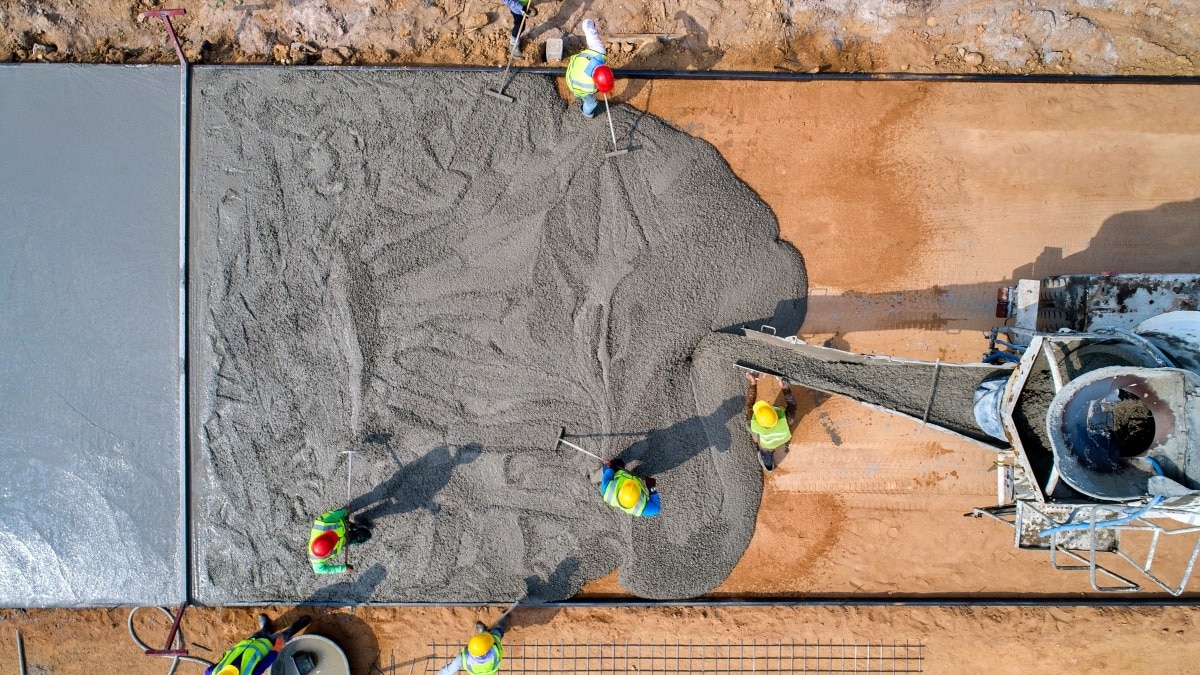
In a groundbreaking scientific achievement, researchers have successfully converted human waste into a bio-concrete that outperforms traditional materials. The resulting concrete is surprisingly 42% stronger, offering a sustainable alternative for the global construction industry.
- Innovation converts processed human waste into high-strength construction material.
- Achieves a 42% increase in compressive strength compared to standard concrete.
- Significant potential to reduce global CO2 emissions from cement production.
The construction industry is currently facing a dual crisis: the escalating need for infrastructure and the devastating environmental impact of cement production. In response, a team of scientists has pioneered a method to integrate processed human waste into concrete mixtures, transforming a biological liability into a structural asset.
The technical process involves treating the waste at extreme temperatures to eliminate pathogens and organic odors, leaving behind mineral-rich ash. When blended with traditional binders, these minerals act as a catalyst, filling microscopic voids in the concrete matrix and significantly enhancing its structural integrity. Rigorous laboratory testing has confirmed that this bio-composite is 42% stronger than conventional concrete.
Why This Matters
BozokMedia analysis shows that this development is a pivotal step toward a 'Circular Economy.' Since the production of Portland cement is responsible for roughly 8% of global greenhouse gas emissions, substituting raw materials with processed waste could drastically lower the industry's carbon footprint while solving the urban crisis of sewage management.
"The transition from linear waste disposal to resource recovery is the only viable path for sustainable urbanization in the 21st century."
Historically, humans have used organic additives in building materials, from straw in mud bricks to volcanic ash in Roman concrete. This modern iteration elevates that concept by utilizing urban waste streams. This innovation is particularly relevant for mega-cities in Asia and Africa, where the demand for affordable, strong housing is at an all-time high.
Frequently Asked Questions
Q1: Is the resulting concrete hygienic and odorless?
Yes, the high-temperature sterilization process ensures that all biological hazards and odors are completely removed before the material is integrated into concrete.
Q2: Can this be used for skyscrapers and heavy infrastructure?
While the strength metrics are superior, further long-term durability and weathering tests are required before it can be certified for high-rise structural loads.