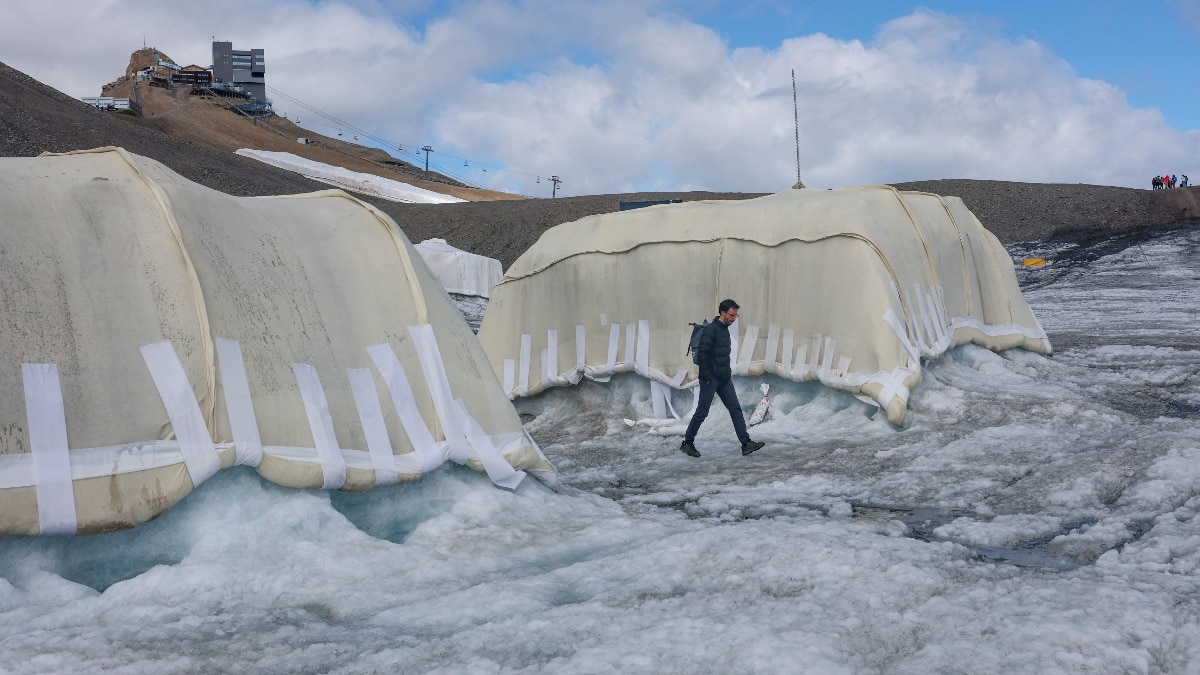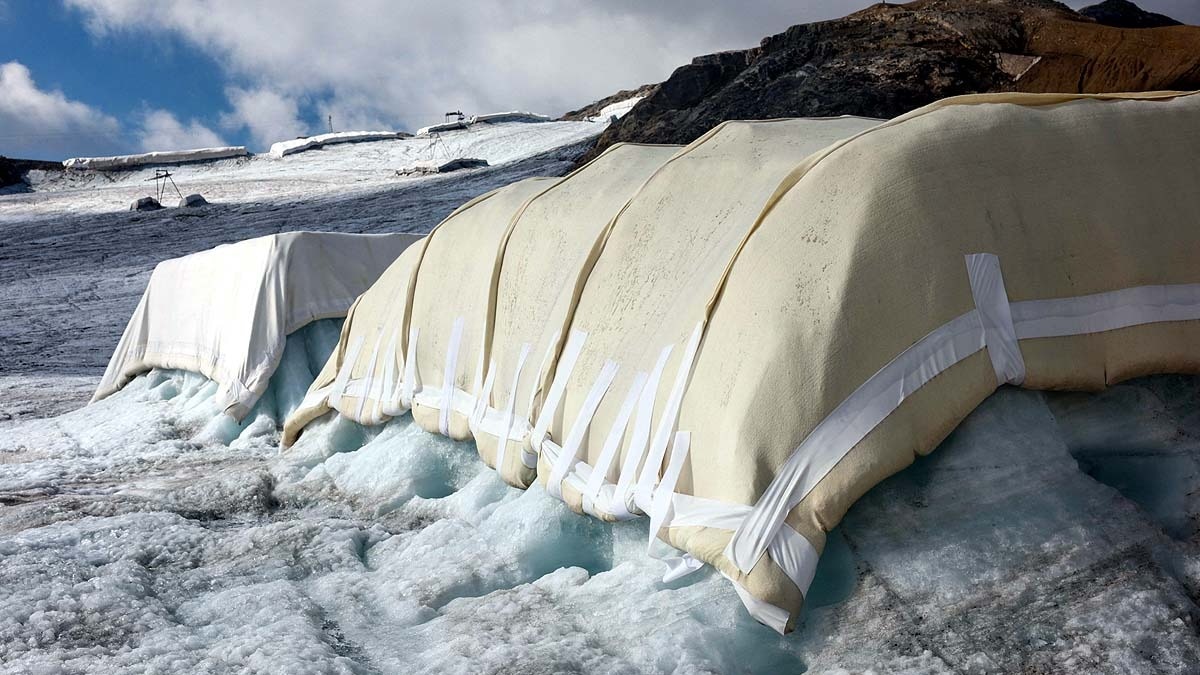
In a groundbreaking move, Swiss scientists are replacing synthetic glacier blankets with natural sheep wool to combat melting ice. This dual-purpose initiative aims to reduce microplastic pollution while repurposing agricultural waste.
- Wool blankets were tested on the Tsanfluron Glacier in western Switzerland.
- Natural wool proved as effective as synthetic blankets in reducing ice melt.
- The project aims to eliminate microplastic pollution and recycle wasted sheep wool.
As global temperatures soar, the glaciers of the Swiss Alps are retreating at an alarming rate. To combat this, researchers from the Summit Foundation and the University of Lausanne have launched the 'Keep it Wool' project. This innovative experiment involves covering approximately 200 square meters of the Tsanfluron Glacier with specialized blankets made from sheep's wool.
For years, the standard practice has been to use white synthetic blankets to reflect sunlight and insulate the ice. However, these plastic-based materials pose a significant environmental threat by shedding microfibers—tiny plastic particles—into the pristine alpine ecosystem. By switching to wool, a biodegradable and natural alternative, scientists hope to protect the ice without contaminating the environment.
Why This Matters
BozokMedia analysis shows that this project is a masterclass in the circular economy. In Switzerland, between 40% and 70% of sheep wool produced annually is considered waste and discarded. Converting this agricultural byproduct into a climate-defense tool transforms a waste problem into an environmental solution.
"By utilizing natural wool, we are not only shielding our glaciers but also eradicating the risk of plastic pollution in sensitive habitats."
Early results from the trial have been highly promising. Bi-weekly measurements revealed that the wool blankets performed just as effectively as their synthetic counterparts in slowing down the melting process. Furthermore, the wool proved to be surprisingly resilient, maintaining its structural integrity despite the freezing and damp conditions of the glacier.
| Feature | Synthetic Blankets | Wool Blankets |
|---|---|---|
| Material | Plastic/Polymers | Natural Sheep Wool |
| Environmental Impact | Microplastic Pollution | Biodegradable (Eco-friendly) |
| Ice Preservation | High | High (Comparable) |
| Resource Source | Industrial Production | Agricultural Waste Recycling |
Despite the success, the scientific team emphasizes that wool blankets are not a panacea. Currently, such covers are applied to only about 0.02% of Switzerland's total glacier area. While they can protect specific, high-value sections of ice for a limited time, they cannot halt the overall retreat of the Alps.
The overarching conclusion remains clear: the only permanent solution to glacier loss is a drastic reduction in global greenhouse gas emissions. Reducing our reliance on coal, oil, and gas is the only way to stabilize global temperatures and ensure the long-term survival of these frozen giants.
Frequently Asked Questions
Q1: Can wool blankets save entire glaciers from melting?
A: No, they are only suitable for protecting small, critical areas temporarily. Global temperature reduction is the only long-term solution.
Q2: Why is wool preferred over synthetic materials?
A: Wool is biodegradable and does not release harmful microplastics into the environment, unlike synthetic plastic blankets.