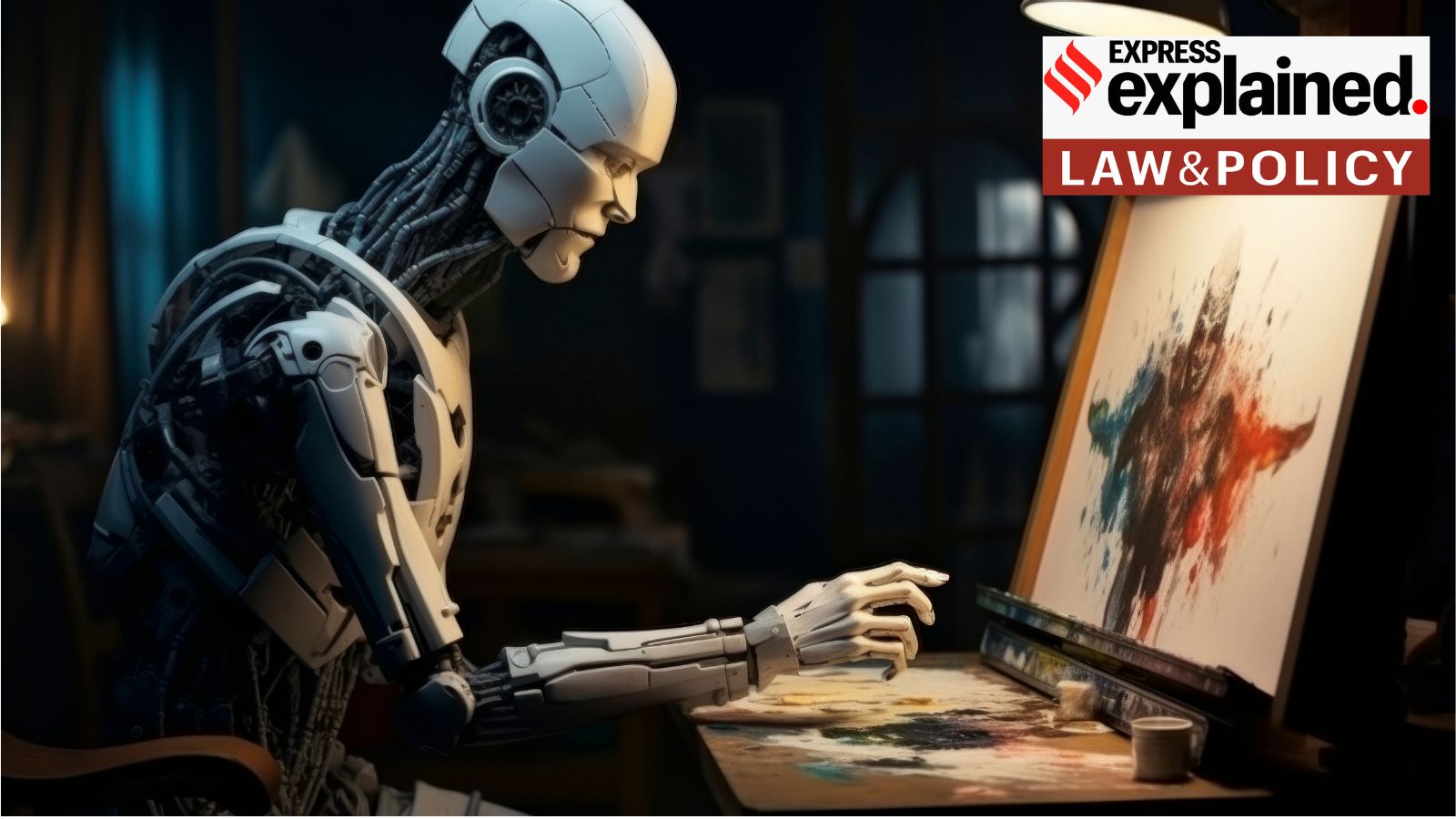
The Copyright Office has ruled that while AI-generated art can be original, an AI cannot legally be recognized as an 'author.' The landmark decision clarifies the distinction between a creative tool and a legal creator.
- AI-generated works can be deemed 'original,' but the AI itself cannot be an 'author.'
- Authorship is a legal status involving rights, responsibilities, and accountability.
- The law identifies the human who 'causes' the work to exist as the legal author.
In a landmark decision that addresses the intersection of technology and law, the Copyright Office has established a clear boundary: Artificial Intelligence (AI) can be a tool for creation, but it can never be an author. This ruling follows the rejection of a copyright application filed by American computer scientist Stephen Thaler regarding an artwork generated by his AI system, DABUS.
The dispute centered on a piece titled 'A Recent Entrance to Paradise.' Thaler sought to register the AI, DABUS (Device for the Autonomous Bootstrapping of Unified Sentience), as the author while naming himself as the owner. The Office, however, maintained that authorship is a legal status that carries specific rights and responsibilities—qualities an AI lacks.
The Distinction Between Originality and Authorship
The Copyright Office's decision hinges on the nuances of the Copyright Act, which distinguishes between whether a work is original and who its author is. Interestingly, the Office ruled in Thaler's favor regarding originality, noting that the AI-generated image was not a mere copy of existing works and showed sufficient creative character.
However, the legal hurdle remained at the authorship stage. Under Section 2(d)(vi) of the Act, the author of a computer-generated work is defined as 'the person who causes the work to be created.' The Office clarified that the emphasis is on the person responsible for the work's origination, rather than the mechanism used to generate the final expression.
Why This Matters
BozokMedia analysis shows that this decision sets a vital precedent for the global tech industry. As generative AI becomes more sophisticated, the legal framework must distinguish between the 'instrument' (the AI) and the 'agent' (the human). By refusing to grant AI legal personhood, the Office ensures that copyright remains tied to human accountability and legal agency.
Authorship is not merely a creative act; it is a legal status that carries the weight of rights and responsibilities.
The ruling highlights that current legal systems are built around 'legal persons' who can enter contracts, hold property, and be sued. Since an AI cannot fulfill these societal roles, it cannot hold the status of an author, regardless of how 'autonomous' its creative process may seem.
| Feature | AI System (DABUS) | Human Creator |
|---|---|---|
| Can be 'Original'? | Yes | Yes |
| Can be 'Author'? | No | Yes |
| Legal Responsibility? | No | Yes |
Frequently Asked Questions
1. If I use AI to make art, do I own the copyright?
Under current interpretations, you can own the copyright as the person who 'caused' the work to be created, provided the work meets originality standards.
2. Can an AI be sued for copyright infringement?
No, because an AI lacks legal personhood; the responsibility would lie with the person or entity operating the AI.