Supreme Court Justice Ujjal Bhuyan has asserted that threatening students for holding dissenting views is a misuse of power and fundamentally violates constitutional principles.
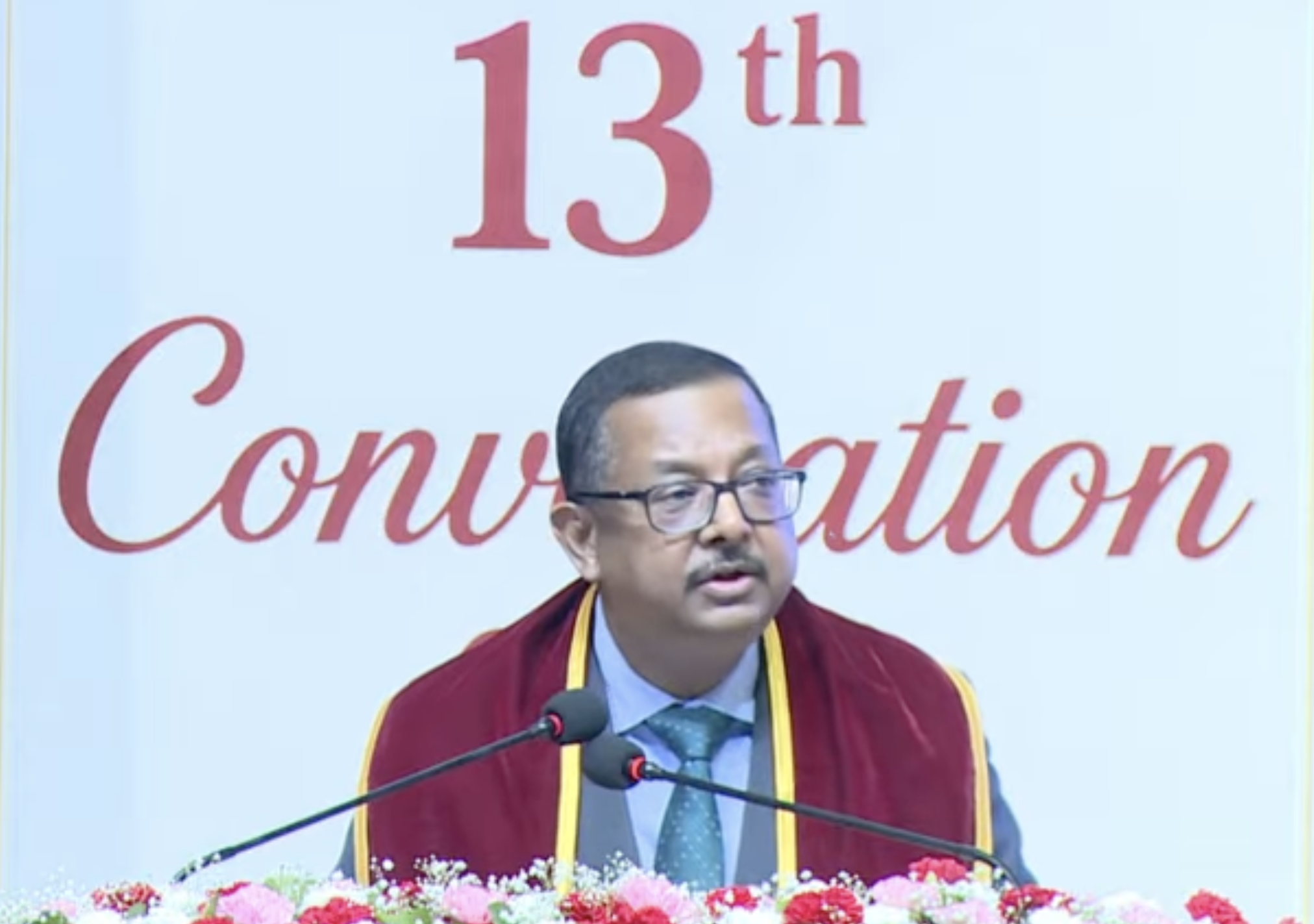
In a profound statement regarding the sanctity of democratic discourse, Supreme Court Justice Ujjal Bhuyan has declared that students cannot be subjected to punitive measures simply for expressing views that diverge from authority. Speaking at the LLM convocation of the National Law University, Delhi, Justice Bhuyan emphasized that the right to question is a cornerstone of liberty and constitutional responsibility.
Justice Bhuyan's remarks address the growing tension between institutional authority and student activism. He argued that a robust democracy does not require uniformity of thought; instead, it thrives on the ability of individuals with diverse convictions to coexist with dignity. "Our Constitution does not seek uniformity of thought," he stated, highlighting the framework's intent to accommodate dissent.
Why This Matters
BozokMedia analysis shows that these remarks are highly significant following recent controversies at NALSAR University of Law and NLSIU Bengaluru. In those instances, student protests led to friction with the Bar Council of India (BCI) and administrative bodies. Justice Bhuyan’s stance reinforces the judicial precedent that academic institutions must remain spaces for intellectual exploration rather than tools for ideological conformity.
"An intolerant mind, by its very nature, is at odds with the spirit of the Constitution."
The Justice further critiqued the rising tide of intolerance, labeling it as "another form of violence." He reminded the audience that India, as the land of Buddha and Gandhi, is built on the principles of peace and tolerance. He warned that when dissent is treated as something to be silenced or punished rather than a legitimate difference of opinion, the very foundation of the constitutional framework begins to erode.
Furthermore, Justice Bhuyan highlighted the critical role of higher education. He posited that if a democratic society is to respect liberty, that culture must be nurtured within universities. These institutions should be environments where students are encouraged to challenge established positions and engage with uncomfortable truths without fear of retribution.
Concluding his address, he called upon the legal profession to look beyond the mere letter of the law and uphold the values of liberty, equality, and justice, even in moments of intense conflict and disagreement.
Frequently Asked Questions
1. Why did Justice Bhuyan call intolerance a form of violence?
He argued that intolerance undermines the constitutional framework and seeks to silence legitimate differences, which mimics the coercive nature of violence.
2. What role should universities play according to the Justice?
He believes universities should be the primary spaces where the habit of thinking freely begins and where difficult questions are welcomed.