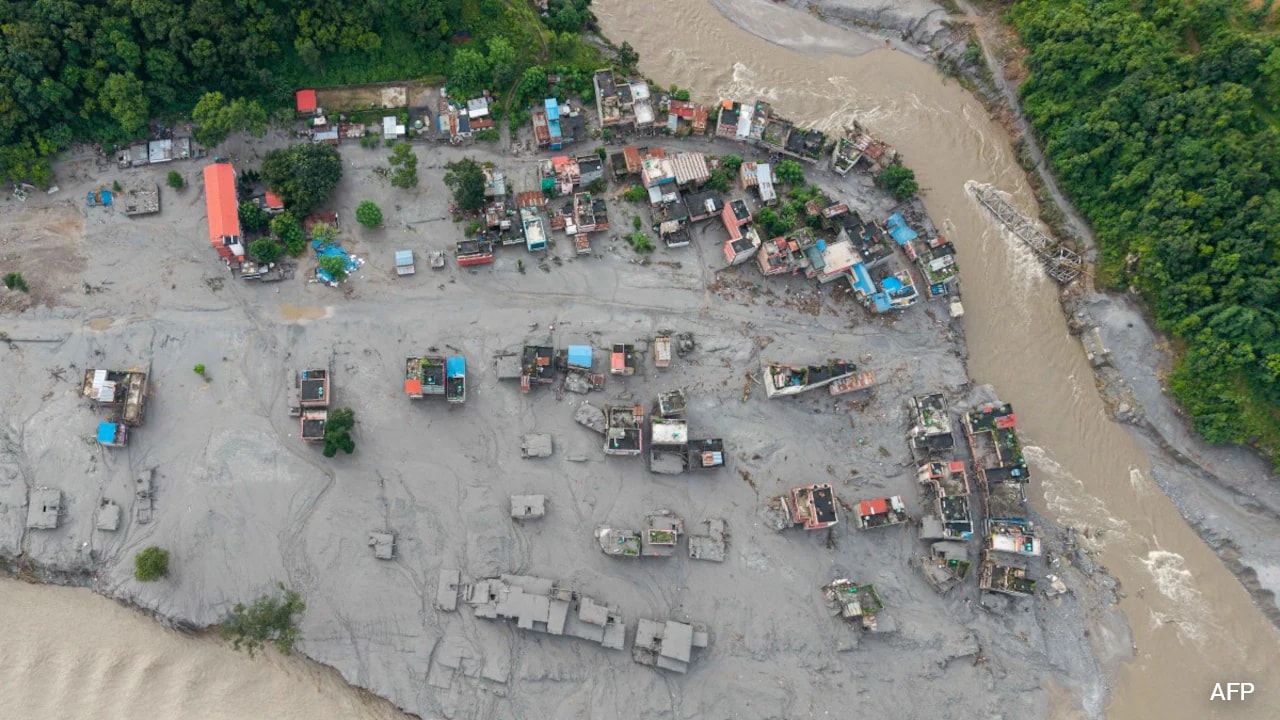
A catastrophic flash flood, suspected to be caused by a glacial lake outburst in Tibet, has swept through Nepal, leaving at least 180 dead and 1,400 missing.
- A suspected glacial lake outburst in Tibet triggered massive flash floods in Nepal.
- At least 180 fatalities confirmed, with 1,400 people reported missing.
- Critical infrastructure, including 19 bridges and 43km of highway, has been destroyed.
- Indian pilgrims on the Kailash Mansarovar Yatra are among those feared missing.
It was an ordinary school day at Trishuli Secondary School in Nepal’s Nuwakot district when chaos erupted. Gyan Deep Sapkota, an 11th-grade student, recalled the terrifying moment teachers began screaming for students to evacuate. As the Trishuli River—fed by the upstream Bhotekoshi—surged with a violent flash flood, students scrambled toward the hills, many suffering from panic attacks as the water tore through their surroundings.
The scale of the disaster is immense, spanning across Nepal and Tibet. Following a suspected Glacial Lake Outburst Flood (GLOF) upstream in Tibet, entire settlements and vital hydropower infrastructure have been obliterated. Nepal Police spokesperson Abi Narayan Kafle confirmed that while 95 bodies have been recovered so far, the death toll is expected to climb sharply as rescue teams reach isolated regions.
Why This Matters
BozokMedia analysis shows that this event underscores the increasing frequency of GLOF events in the Himalayan region, driven by accelerating glacial melt. The destruction of critical transit corridors and hydropower assets represents a massive setback to the regional economy and long-term stability.
The suddenness of these glacial outbursts leaves almost zero window for evacuation, turning manageable weather events into absolute catastrophes.
Local residents describe an apocalyptic landscape. Rajendra Poudel, a healthcare worker from Betrawati, noted that scenic horticulture gardens and hydropower plants were replaced by nothing but debris and silt overnight. Similarly, Lal Bahadur Rai reported that while his house survived by mere meters, the surrounding schools and solar power stations were completely wiped out by the torrent.
The infrastructure damage is staggering. According to the Nepal Prime Minister’s Office, 19 vehicle bridges and 43km of essential highways have been swept away, cutting off remote Himalayan communities. Districts including Rasuwa, Nuwakot, Dhading, Gorkha, and Chitwan remain under high alert as authorities struggle with connectivity issues.
Adding to the international dimension of the tragedy, many of the missing are believed to be Indian tourists en route to the sacred Kailash Mansarovar Yatra. Prime Minister Narendra Modi has held discussions with Nepal’s Prime Minister Balen Shah, assuring humanitarian assistance to aid the rescue and relief efforts.
Frequently Asked Questions
Question 1: What is causing the high number of missing persons?
Answer: The rapid speed of the flood and the destruction of communication lines and roads have made it extremely difficult to locate survivors and verify their safety.
Question 2: Is there international aid coming to Nepal?
Answer: Yes, India has assured humanitarian support following high-level discussions between the Prime Ministers of both nations.
| Impact Category | Recorded Damage/Loss |
|---|---|
| Confirmed Deaths | 180+ |
| Missing Persons | 1,400+ |
| Bridges Destroyed | 19 |
| Highway Lost | 43 km |