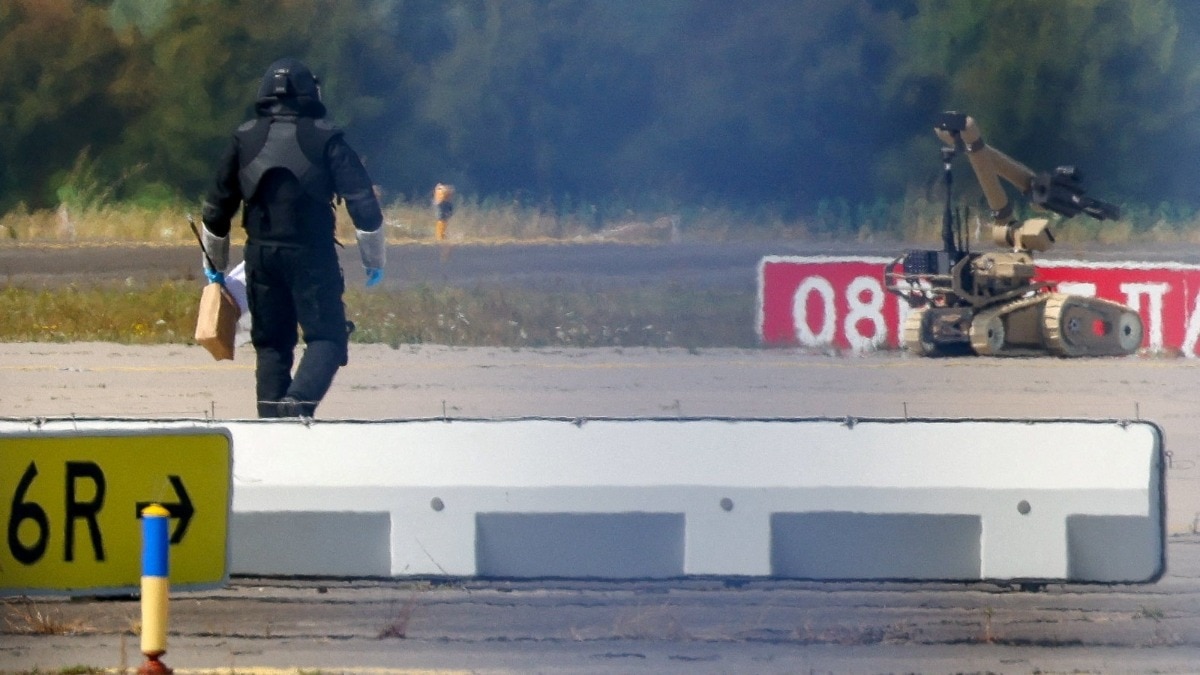
The German government has officially linked Russia to an attempted drone attack at Leipzig Airport, prompting immediate diplomatic retaliation and widespread support from NATO and EU allies.
- Germany concluded that the Leipzig airport drone attack was orchestrated by Russian state agencies.
- Berlin announced the closure of the Russian Consulate General in Bonn and the termination of the Russian House agreement in Berlin.
- NATO Secretary General Mark Rutte and EU leaders expressed full solidarity with Germany.
- The incident is viewed as part of a broader pattern of Russian hybrid warfare in Europe.
In a significant escalation of diplomatic tensions, the German government announced on Tuesday that it has concluded Russia was responsible for an attempted drone attack at Leipzig Airport last month. This finding has triggered a wave of diplomatic sanctions and international condemnation.
Interior Minister Alexander Dobrindt stated that intelligence findings and police investigations clearly indicate that the individuals involved in the Leipzig incident were acting on behalf of Russian state agencies. In direct response, Germany has moved to close the Russian Consulate General in Bonn and terminate its agreement with the Russian House cultural center in Berlin.
Why This Matters
BozokMedia analysis shows that this incident marks a critical shift in how European nations perceive security threats. The transition from traditional military threats to 'hybrid operations'—which include drone incursions, cyberattacks, and disinformation—requires a unified and much more aggressive defensive posture from the entire alliance.
The Leipzig attack is not an isolated event but a calculated move in a larger chess game of hybrid warfare.
Foreign Minister Johann Wadephul emphasized that Germany does not view this as a standalone incident. Instead, it is part of a larger, systemic pattern of Russian hybrid operations aimed at destabilizing Europe. Wadephul reaffirmed that Germany would remain secure and would not allow intimidation to fracture its social cohesion.
The Russian response has been predictably dismissive. Russian Foreign Ministry spokeswoman Maria Zakharova labeled Germany's measures as "anti-Russian actions," while the Russian Embassy in Berlin characterized the accusations as a "fabricated provocation" and part of a "new wave of anti-Russian hysteria."
Historical Background
Since the invasion of Ukraine, European security architecture has faced unprecedented challenges. Hybrid warfare—the use of non-military tools to achieve strategic objectives—has become a primary concern for NATO members, involving everything from energy blackmail to targeted disruptions of civil infrastructure like airports.
The international community has responded with overwhelming unity. NATO Secretary General Mark Rutte expressed "full solidarity" with German Chancellor Friedrich Merz, while Italian Prime Minister Giorgia Meloni and French President Emmanuel Macron warned that such attacks cannot go unanswered. This collective stance aims to bolster deterrence across the continent.
Frequently Asked Questions
Question 1: What specific measures did Germany take against Russia?
Answer: Germany is closing the Russian Consulate General in Bonn and terminating the agreement with the Russian House cultural center in Berlin.
Question 2: How has NATO responded to the attack?
Answer: NATO has expressed full solidarity with Germany and pledged to strengthen its ability to deter malign hybrid actions across the alliance.