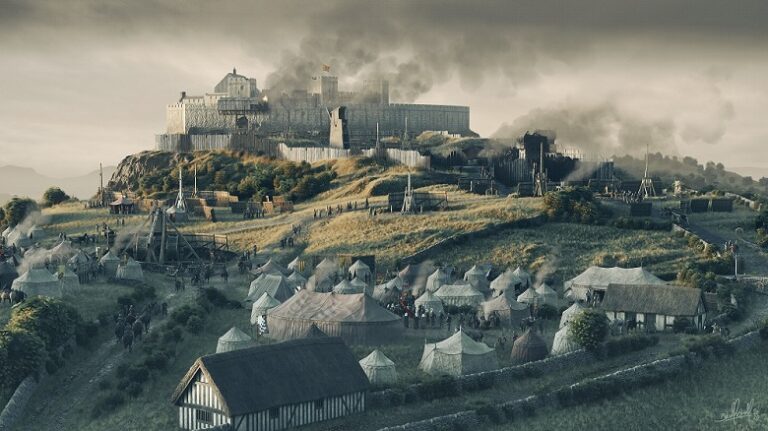
Paleopathologists have identified a skeleton at Stirling Castle as the only documented instance of a human being killed by a trebuchet projectile, highlighting the sheer brutality of medieval siege warfare.
- Skeleton 150 discovered beneath the chapel of Scotland's Stirling Castle.
- The individual was struck by a boulder traveling at nearly 300 km/h.
- Skull suffered 61 distinct fractures, marking a unique historical find.
In the annals of medieval warfare, the trebuchet was feared as a machine of mass destruction, designed to shatter castle walls. However, a grim discovery at Stirling Castle in Scotland has provided the first definitive evidence of a direct human hit. A man, now known as Skeleton 150, was crushed by a small boulder that struck his upper back with devastating force.
The findings were presented by Jo Buckberry, a paleopathologist from the University of Bradford, during the 25th European Meeting of the Paleopathology Association. According to Buckberry, while many skeletons in the area showed signs of violent death, Skeleton 150 was unique due to the catastrophic nature of the upper-body trauma.
Anatomy of a Catastrophe
The physical evidence is harrowing. The victim's skull was shattered in 61 separate places, and approximately 60 jagged bone fragments were found scattered across the ribcage. The impact was so severe that the right shoulder was completely broken, and the right leg above the knee was virtually pulverized.
“It highlights the brutality of medieval warfare,” said paleopathologist Jo Buckberry.
Why This Matters
BozokMedia analysis shows that this discovery fills a significant gap in our understanding of siege casualties. While we know thousands died in medieval battles, the specific forensic evidence of a trebuchet strike is unprecedented. It transforms a theoretical possibility of 'accidental hits' into a documented historical fact, illustrating the terrifying kinetic energy of these ancient weapons.
Historical Background
Trebuchets were the pinnacle of siege engineering before the advent of gunpowder. Using a counterweight system, they could launch projectiles weighing hundreds of kilograms over vast distances. Stirling Castle, a strategic stronghold in Scotland, was often the center of violent disputes, making it a likely site for such a catastrophic event.
Frequently Asked Questions
Q1: What exactly is a trebuchet?
A: A trebuchet is a type of catapult that uses a counterweight to propel heavy stones or other projectiles toward a target, primarily used in medieval sieges.
Q2: Why is Skeleton 150 considered unique?
A: Because the specific pattern of massive, crushing fractures to the upper body is consistent with a high-velocity projectile hit, making it the only confirmed trebuchet casualty in history.