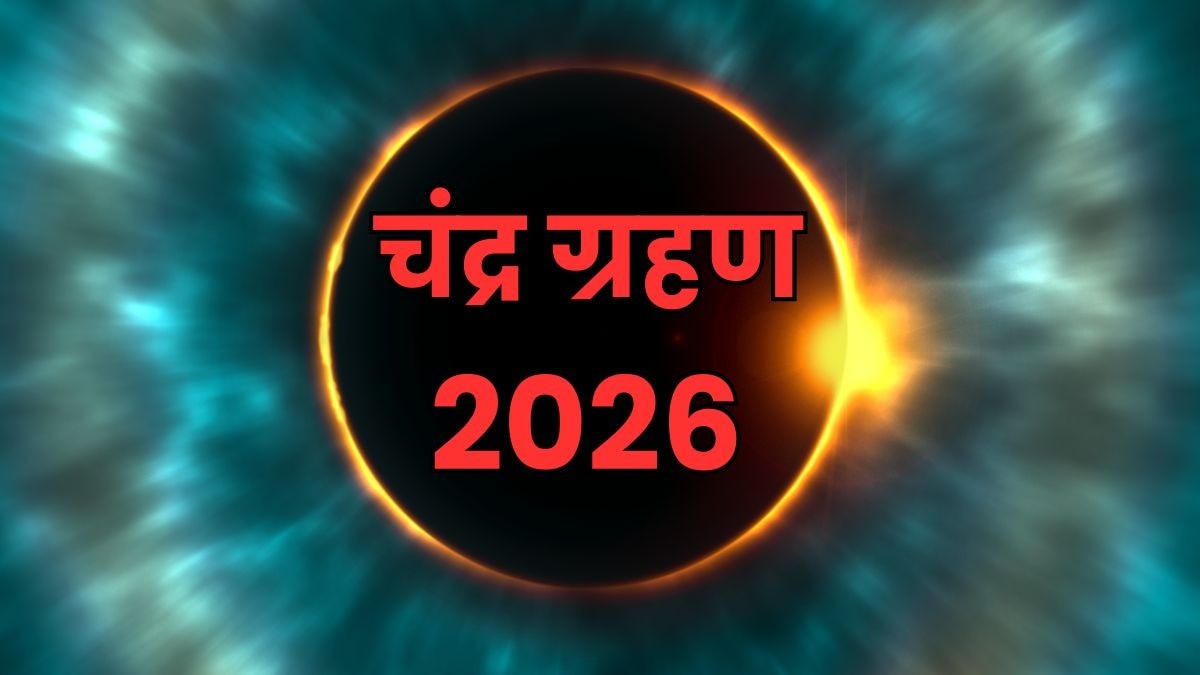
The final lunar eclipse of 2026 is set to occur on August 28. Discover the exact timings, its visibility in India, and whether Sutak Kaal applies.
- The last lunar eclipse of 2026 will occur on August 28.
- It will be a Penumbral (Partial) Lunar Eclipse.
- The eclipse will NOT be visible in India, meaning Sutak Kaal is not applicable.
- Timings: Starts at 06:55 AM and ends at 12:30 PM IST.
The astronomical calendar marks August 28, 2026, as a significant date for celestial observers. According to the Drik Panchang, the year's final lunar eclipse is scheduled to take place on this day. This event is classified as a Penumbral Lunar Eclipse, which will be partially visible across various parts of the globe.
Detailed Eclipse Timings (IST)
According to Indian Standard Time (IST), the lunar eclipse will commence at 6:55 AM. The partial phase will become apparent at 8:04 AM, reaching its peak intensity at 9:43 AM. The entire lunar event is expected to conclude by 12:30 PM.
Visibility and the 'Sutak' Rule in India
A crucial aspect for Indian citizens is that this eclipse will not be visible in India. The phenomenon will primarily be observable in parts of Western Asia, South America, Africa, and several regions in Europe. Because the eclipse is not visible from the Indian subcontinent, the traditional Sutak Kaal (inauspicious period) will not be observed. Consequently, there is no need to restrict religious or auspicious activities in India.
Why This Matters
BozokMedia analysis shows that the intersection of astronomical events and religious traditions often creates confusion regarding ritualistic timings. Since the visibility is the deciding factor for 'Sutak' in Vedic astrology, the lack of visibility in India ensures that daily life and religious ceremonies remain unaffected by this specific event.
The spiritual impact of an eclipse in Vedic tradition is heavily tied to its visibility in a specific geographic region; absence of visibility equates to absence of ritualistic restrictions.
Impact on Raksha Bandhan
Coincidentally, Raksha Bandhan falls on August 28, 2026. Many devotees expressed concern regarding the eclipse's impact on the festival. However, experts confirm that since the eclipse is not visible in India and there are no significant 'Bhadra' obstructions, sisters can celebrate the festival and tie Rakhis during auspicious timings without any celestial concerns.
Frequently Asked Questions
Q1: Will there be any restrictions on fasting during the eclipse?
Answer: Since the eclipse is not visible in India, there are no specific restrictions on fasting or eating due to Sutak Kaal.
Q2: Where can I watch the eclipse live?
Answer: The eclipse can be observed in parts of Europe, Africa, and the Americas.