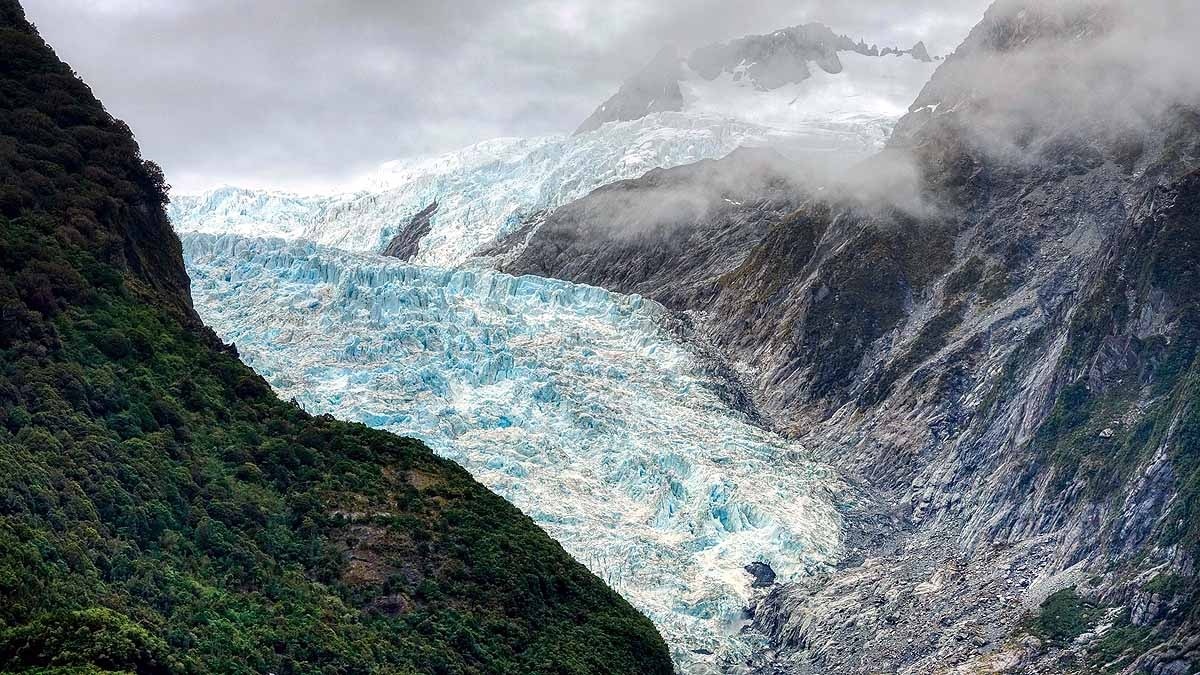
Accelerated glacial melting due to climate change has led to a 50% increase in the size and number of glacial lakes since 1990. Experts warn that 15 million people globally, particularly in the Himalayas and Andes, are now vulnerable to catastrophic Glacial Lake Outburst Floods (GLOF).
- Approximately 15 million people worldwide live in areas directly threatened by Glacial Lake Outburst Floods (GLOF).
- The area and number of glacial lakes have increased by 50% since the 1990s.
- The rate of glacial retreat in the first 25 years of the 21st century has doubled compared to the previous 25 years.
- Central Asia, specifically India, Nepal, China, and Pakistan, are among the most vulnerable regions.
The devastating floods on the border of Nepal and Tibet have once again brought the terrifying reality of Glacial Lake Outburst Floods (GLOF) to the forefront. This tragedy, which claimed hundreds of lives and left thousands missing, was triggered by the collapse of a glacier and the subsequent bursting of a glacial lake. This event serves as a grim reminder of the volatility of mountain ecosystems under the pressure of global warming.
A GLOF occurs when the natural dam—composed of ice, debris, and sediment known as a 'moraine'—that holds back a glacial lake fails. Unlike engineered concrete dams, these natural barriers are highly unstable. Factors such as earthquakes, extreme rainfall, or a massive chunk of a glacier falling into the lake can trigger a breach, releasing a wall of water that obliterates everything in its path down the valley.
Why This Matters
BozokMedia analysis shows that the intersection of rapid glacial melting and increasing human encroachment into high-altitude valleys has created a perfect storm. The risk is no longer just a scientific projection but a present-day humanitarian crisis. Without the immediate implementation of satellite-based monitoring and community-level early warning systems, the scale of future casualties in the Himalayas could be unprecedented.
"Glacial melting is not just raising sea levels; it is creating unstable 'water bombs' in the mountains that can detonate without warning."
Historical data compiled by the University of Vienna reveals a staggering trend: between 850 and 2022, 3,151 glacial lake floods were recorded across 27 countries. The frequency has accelerated sharply; while the early 20th century saw an average of 7.6 events per year, the 2010s saw this jump to 43.7 events per year—a six-fold increase in frequency.
| Region | Vulnerability Level | Key At-Risk Countries |
|---|---|---|
| Central Asia (Himalayas) | Extremely High | India, Nepal, China, Pakistan |
| South America (Andes) | High | Peru, Bolivia, Chile, Argentina |
| Europe (Alps) | Medium-High | Switzerland, Italy, France, Austria |
While some regions like Peru have invested in risk mitigation, reducing death tolls, the Himalayan region remains critically exposed. The loss of ice in the Himalayas is among the fastest in the world, driven not by local fluctuations but by anthropogenic climate change. The doubling of the retreat rate in the last 25 years underscores the urgency of the situation.
Frequently Asked Questions
1. What exactly is a GLOF?
GLOF stands for Glacial Lake Outburst Flood. It is a sudden release of water from a lake fed by glacier melt, occurring when the natural dam containing the lake fails, leading to catastrophic flooding downstream.
2. Why is the Himalayan region more at risk than others?
The Himalayas experience some of the fastest ice loss globally and have a high density of populations living in the narrow valleys directly below these unstable glacial lakes.